Basil is one of the most loved herbs in the world. It brings fresh flavor to pasta, pizza, salads, soups, and homemade pesto. But basil is more than just one simple green plant. There are many varieties, each with its own leaf shape, color, aroma, and taste.
If you are growing basil in your backyard or even in pots on a balcony, trying different types can make your garden more colorful and your cooking more exciting. Below are ten basil varieties that grow well in home gardens across the United States.
Where Basil Grows Best in the U.S.
Basil is usually grown as an annual because it cannot survive frost. It grows best when temperatures stay above 55°F. Most gardeners plant it after the last spring frost and harvest before the first fall frost.
Basil can be grown in hardiness zones 4 through 11. In colder areas, seeds can be started indoors and transplanted outside when the weather warms up. In warmer climates, basil may grow almost year-round and sometimes reseeds itself.
Basil also produces flowers that bees absolutely love. Many gardeners allow some plants to bloom just to support pollinators.
10 Basil Varieties to Try
1. Sweet Basil
Sweet basil (Ocimum basilicum) is the classic basil most people know. It has a sweet, slightly peppery flavor and a strong, fresh aroma.
The leaves are bright green, smooth, and oval-shaped, usually 2 to 3 inches long. Plants can grow up to two feet tall.
It is widely used in Italian dishes like pasta sauce, pizza, and pesto. If you only grow one basil variety, sweet basil is a safe and versatile choice.
2. Genovese Basil
Genovese basil (Ocimum basilicum ‘Genovese’) is considered the gold standard for pesto.
It has large, domed leaves that are slightly wrinkled and thicker than standard sweet basil. The flavor is rich, sweet, and slightly spicy with hints of anise.
Genovese basil is perfect for Caprese salads, pesto, and tomato-based sauces. It also looks beautiful when planted in large groups.
3. Red Rubin Basil
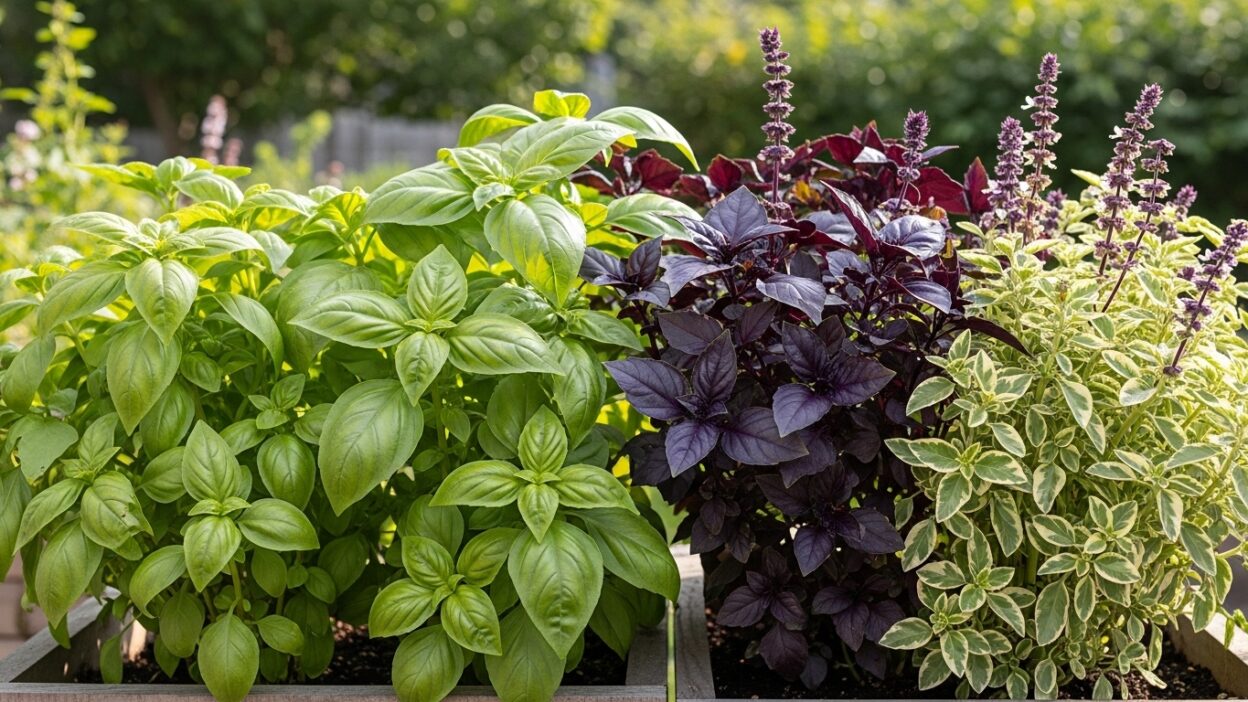
Red Rubin basil (Ocimum basilicum ‘Purpurascens’) stands out because of its deep purple-red leaves. Some leaves show a mix of purple and green, which makes the plant especially attractive.
The flavor is spicy and clove-like with a slightly bitter finish. Because it is stronger than sweet basil, it is usually used in smaller amounts.
Red Rubin adds bold color to salads and pairs well with garlic, onion, and tomato dishes.
4. Dark Opal Basil
Dark Opal basil (Ocimum basilicum ‘Dark Opal’) is another purple variety known for its deep, rich leaf color.
It has a slightly sweet and spicy flavor with an anise note. The plant grows about 1 to 2 feet tall and has a bushy shape.
Dark Opal is often used as a garnish because of its dramatic color. It works well in salads and as an edible decoration.
5. Lemon Basil
Lemon basil (Ocimum citriodorum) has a bright citrus scent and flavor.
Its leaves are slightly smaller and more delicate than sweet basil. The taste combines classic basil with a light lemon twist.
This variety is popular in Southeast Asian cooking, especially Thai dishes. It pairs well with fish, chicken, and vegetables and adds a refreshing note to salads.
6. Thai Basil
Thai basil (Ocimum basilicum var. thyrsiflora) has a bold, spicy flavor with hints of licorice, anise, and cinnamon.
The leaves are deep green with a slight purple tint, and the stems often show purple coloring. The aroma is sweet and strong.
It is commonly used in stir-fries, curries, and soups. Thai basil holds its flavor well when cooked, making it perfect for hot dishes.
7. Purple Ruffles Basil
Purple Ruffles basil (Ocimum basilicum ‘Purple Ruffles’) is known for its large, deeply ruffled purple leaves.
The plant can grow about two feet tall and produces pinkish-purple flowers late in the season.
Its flavor is mild with a slight clove taste. It works well in Mediterranean dishes and looks stunning in both gardens and salads.
8. Cinnamon Basil
Cinnamon basil (Ocimum basilicum ‘Cinnamon’) has a warm cinnamon-like scent and flavor.
The leaves are bright green and slightly serrated. The plant grows upright and produces attractive purple flower stems.
It is often used in Thai cuisine and can be added to stir-fries and soups. Some bakers also experiment with it in sweet recipes.
9. Pesto Perpetuo
Pesto Perpetuo basil (Ocimum basilicum ‘Pesto Perpetuo’) is unique because of its variegated leaves. The leaves are green in the center with creamy white edges.
This plant grows upright and can reach over two feet tall. It flowers slowly, which means it produces leaves for a longer period.
The flavor is mild and slightly sweet with subtle lemon notes. It is excellent for pesto, pasta, and salads. Its decorative leaves also make it a beautiful addition to patios and herb beds.
10. Holy Basil (Tulsi)
Holy basil (Ocimum tenuiflorum), also known as Tulsi, is considered sacred in Hindu tradition and widely used in Ayurvedic practices.
The plant grows 2 to 3 feet tall and produces small white or lavender flowers that bees love. The leaves are bright green and slightly serrated.
Its flavor is complex and spicy with notes of clove, mint, and anise. It is commonly used in Indian and Southeast Asian dishes.
Unlike most basils, Holy basil can self-seed strongly and return year after year if allowed to flower and drop seeds.
Final Thoughts
Growing basil is one of the easiest ways to add both beauty and flavor to your home garden. From classic sweet basil to colorful purple varieties and citrus-scented lemon basil, each type offers something special.
By planting a mix of varieties, you can enjoy different flavors in your kitchen while creating a vibrant garden that also supports bees and other pollinators.