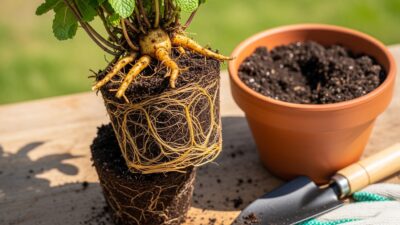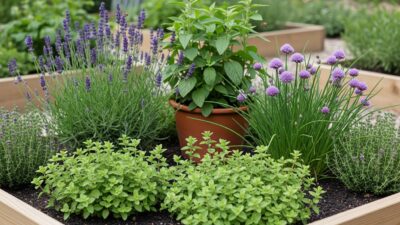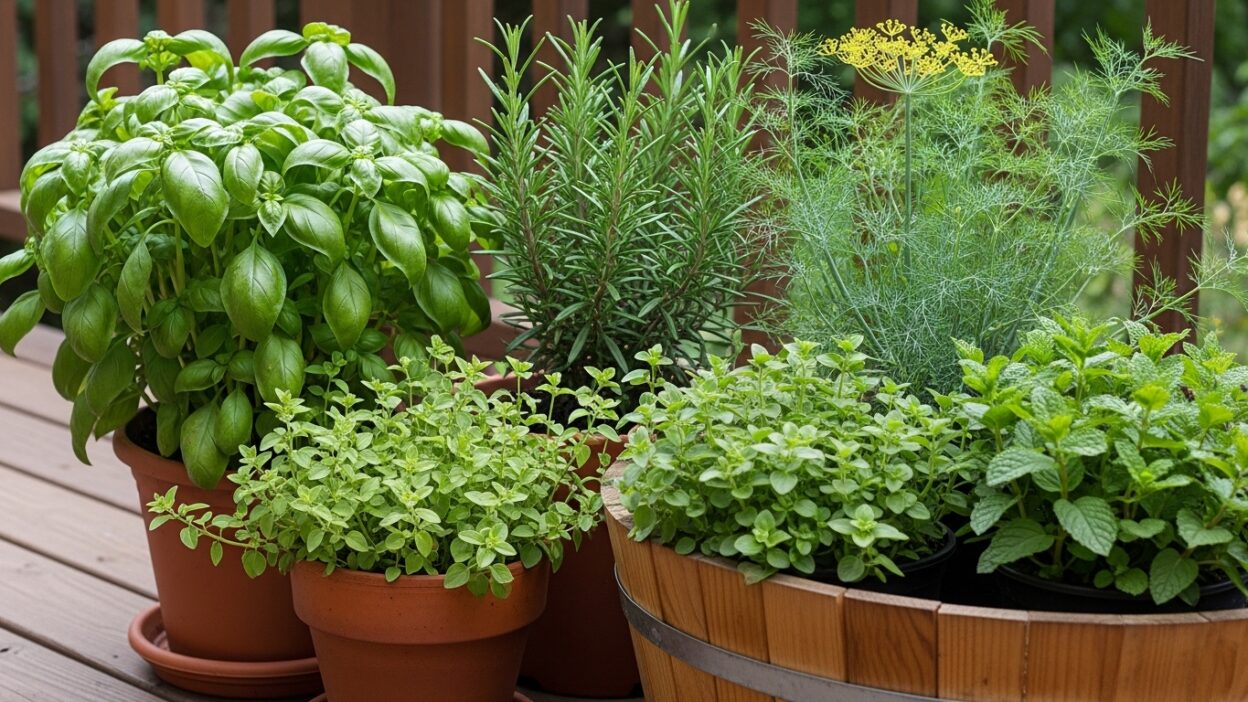
There is truly nothing like the flavor of freshly cut herbs added to a meal. A handful of basil tossed into pasta or a few sprigs of thyme dropped into soup can completely transform a dish. Growing your own herbs makes that experience even better. Instead of buying small plastic containers from the store, you can simply step outside and snip exactly what you need.
Herb gardening is one of the quiet pleasures of growing food. The plants are beautiful on their own, and they bring powerful flavor to everyday cooking. Many herbs grow happily in containers, raised beds, or directly in the ground. Below are ten dependable cooking herbs, along with practical growing notes and useful kitchen ideas.
Basil
Ocimum basilicum
Few herbs are as popular as basil. It is essential for caprese salads and pesto, and it grows vigorously throughout the warm season. When the plant begins sending up flower stalks, pinch or trim them back. This keeps the plant producing tender leaves until cooler weather arrives.
Start from seed or buy transplant? Either works well. Basil germinates easily from seed, and young plants are widely available at garden centers.
Annual or perennial? Outdoors, basil is treated as an annual. Indoors, it can survive longer with proper light and care.
Grow indoors? Yes. Basil grows well inside, even in a sunny kitchen window. Some gardeners root cut stems in water.
Culinary uses: Fresh leaves pair perfectly with tomatoes, salads, and pizza. Leaves can also be dried for storage. Pesto is a classic favorite.
Pollinator bonus: Bees love basil flowers. Allowing a few plants to bloom supports pollinators.
Bay Leaf (Bay Laurel Tree)
Laurus nobilis
Bay leaves add depth to soups, stews, sauces, and beans. A single dried leaf simmered in liquid infuses subtle flavor.
Bay laurel is slow-growing and can be pruned to remain compact in a container. It is even shaped into small ornamental forms.
Start from seed or buy transplant? Buy a transplant. A young tree establishes more easily.
Annual or perennial? It is a perennial tree but does not tolerate harsh winters. In colder climates, bring it indoors during winter.
Culinary uses: Soups, stews, rice, tomato sauces, and homemade stock. Remove the leaf before serving.
Bonus: Insects dislike bay leaves, so dried leaves are sometimes placed in stored grains like flour or rice.
Cilantro
Coriandrum sativum
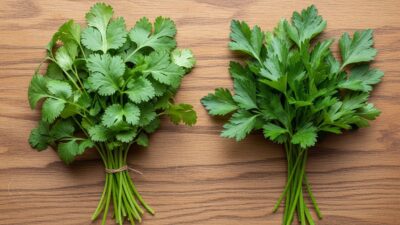
Cilantro brings bright, fresh flavor to salsas, guacamole, rice dishes, dressings, and beans. Its flavor is distinct and difficult to replace.
Start from seed or buy transplant? Both options work, but growing from seed is more economical.
Annual or perennial? Cilantro is a cool-season annual. It bolts quickly in hot weather, so sow early in spring.
Culinary uses: Leaves and stems are edible. When the plant flowers, it produces seeds known as coriander.
No-waste bonus: Green coriander seeds can be eaten fresh. Mature dried seeds are ground as spice.
Pollinator bonus: Bees are attracted to cilantro flowers.
Dill
Anethum graveolens
Dill has delicate, feathery leaves and produces large yellow flower heads later in the season. The flowers resemble fireworks and eventually form seeds.
Harvest leaves as needed and allow some plants to flower for seed production.
Start from seed or buy transplant? Either works well. Dill grows easily from seed.
Annual or perennial? Dill is an annual, but it often reseeds itself if allowed to drop seeds.
Grow indoors? It can grow indoors in bright light, though outdoor conditions are better.
Culinary uses: Fresh dill enhances dips, dressings, soups, and summer dishes. Seeds are widely used in pickling.
Pollinator bonus: Swallowtail butterflies lay eggs on dill, and caterpillars feed on the plant. Growing extra plants supports them.
No-waste bonus: Both leaves and seeds are useful.
Mint
Mentha
Mint is fragrant, lush, and extremely vigorous. There are many varieties, including peppermint, spearmint, chocolate mint, and orange mint.
Start from seed or buy transplant? Buy a plant. Mint spreads quickly through underground roots.
Annual or perennial? Mint is a hardy perennial that dies back in winter and returns in spring.
Growing tip: Plant mint in containers to prevent it from spreading uncontrollably.
Culinary uses: Teas, cocktails, sauces, salads, and infused water.
Oregano
Origanum vulgare
Oregano is both flavorful and attractive to pollinators. It spreads gradually and forms dense patches over time.
Start from seed or buy transplant? Either, though transplants give a faster start.
Annual or perennial? Oregano is a perennial that dies back in winter and returns each year.
Culinary uses: Essential in Italian cooking. Harvest young stems in spring, dry them, and store for year-round use.
Pollinator bonus: Bees are especially drawn to oregano flowers.
Parsley (Flat-Leaf)
Petroselinum crispum
Parsley is one of the most reliable herbs in the garden. It reseeds itself easily if allowed to flower.
Start from seed or buy transplant? Either works well.
Annual or perennial? Flat-leaf parsley is a biennial. It produces leaves in the first year and flowers in the second. Seeds drop and sprout the following season.
Grow indoors? Possible, though it prefers outdoor conditions.
Culinary uses: Sauces, soups, salads, and garnishing finished dishes.
Pollinator bonus: Swallowtail butterflies lay eggs on parsley leaves. Many gardeners grow extra plants just for them.
Rosemary
Salvia rosmarinus
Rosemary has an upright growth habit and a strong, woody fragrance.
Start from seed or buy transplant? Buy a transplant. Rosemary is difficult to grow from seed.
Annual or perennial? In warm climates it is a perennial shrub. In colder zones, it is often treated as an annual or brought indoors during winter.
Culinary uses: Excellent with chicken, potatoes, steak, soups, and pan sauces. Thick stems can be used as skewers.
Tarragon
Artemisia dracunculus
Tarragon has a subtle anise-like flavor and is popular in French cooking.
Start from seed or buy transplant? Purchase a French tarragon transplant. Russian tarragon has weaker flavor.
Annual or perennial? Tarragon is a perennial that regrows from its roots each spring.
Culinary uses: Salad dressings, vinaigrettes, chicken, seafood, and vegetables.
Thyme
Thymus vulgaris
Thyme is a compact herb with small leaves and a strong aroma. It works beautifully in soups and stews.
Start from seed or buy transplant? Buy a transplant. Seeds germinate slowly and unevenly.
Annual or perennial? Thyme is a hardy perennial and often remains evergreen in many zones.
Culinary uses: Tie sprigs into bundles and simmer in soups and sauces. Leaves fall off during cooking.
Pollinator bonus: Bees are very attracted to thyme flowers.
Final Thoughts
If you are just beginning with herbs, this list provides an excellent starting point. Herbs may not always grab attention like large vegetables, but they are essential in the kitchen and surprisingly rewarding to grow.
With a few containers or a small garden space, you can enjoy fresh flavor throughout the season, straight from your own backyard.