Nothing tastes better than a big bowl of salad made from greens you grew yourself. Freshly picked leaves are crisp, flavorful, and full of nutrients. As mentioned in the opening section on page 1, salad greens are also one of the easiest ways to start vegetable gardening because they grow quickly and reward you fast.
The photo on page 1 shows a raised garden bench filled with spring greens and cilantro on the left, proving that even small spaces can produce a beautiful harvest.
Most leafy greens prefer cooler weather, which makes them perfect for early spring planting when gardeners are eager to get outside again. They are beginner friendly and grow just as well in containers as they do in garden beds.
Is Lettuce Really a Vegetable?
As explained on page 2, yes, lettuce and leafy greens are absolutely vegetables. While iceberg lettuce may not offer many nutrients, darker greens like spinach, kale, and arugula are packed with vitamins and minerals.
It is also worth remembering that not every salad green is technically lettuce. For example, kale belongs to the same family as cabbage and broccoli, but it still belongs in your salad bowl.
Salad Greens Basics
Page 2 highlights that most leafy greens grow best in cool temperatures but can sometimes handle part of the summer if given shade and proper care.
They grow easily from seed and can be harvested in just a few weeks. One helpful tip mentioned is that greens are “pick as you need” plants. You do not have to wait for a full head to form. Instead, harvest the outer leaves first and let the center continue growing. This keeps your plant producing longer.
Container gardening works especially well for lettuce. As described on page 2, containers can be moved out of harsh midday sun to delay bolting. Shade cloth can also help protect plants during warm spells.
Now let’s look at the seven featured greens.
Spinach
Scientific name: Spinacia oleracea
When to Plant: Sow seeds as soon as the soil can be worked in early spring. Ideal soil temperature is between 40°F and 75°F (page 3).
First Harvest: About 40 to 45 days after planting.
Flavor: Mild and slightly sweet when young, becoming stronger and slightly bitter as leaves mature.
Season: A true cool-weather crop that bolts in summer heat. Best grown in spring and fall.
Sunlight: Full sun to partial shade with at least 3 to 4 hours of direct sunlight daily.
Fertilizer: Apply a balanced fertilizer at planting. If leaves yellow, add nitrogen.
Pests/Disease: Watch for downy mildew, aphids, and leaf miners.
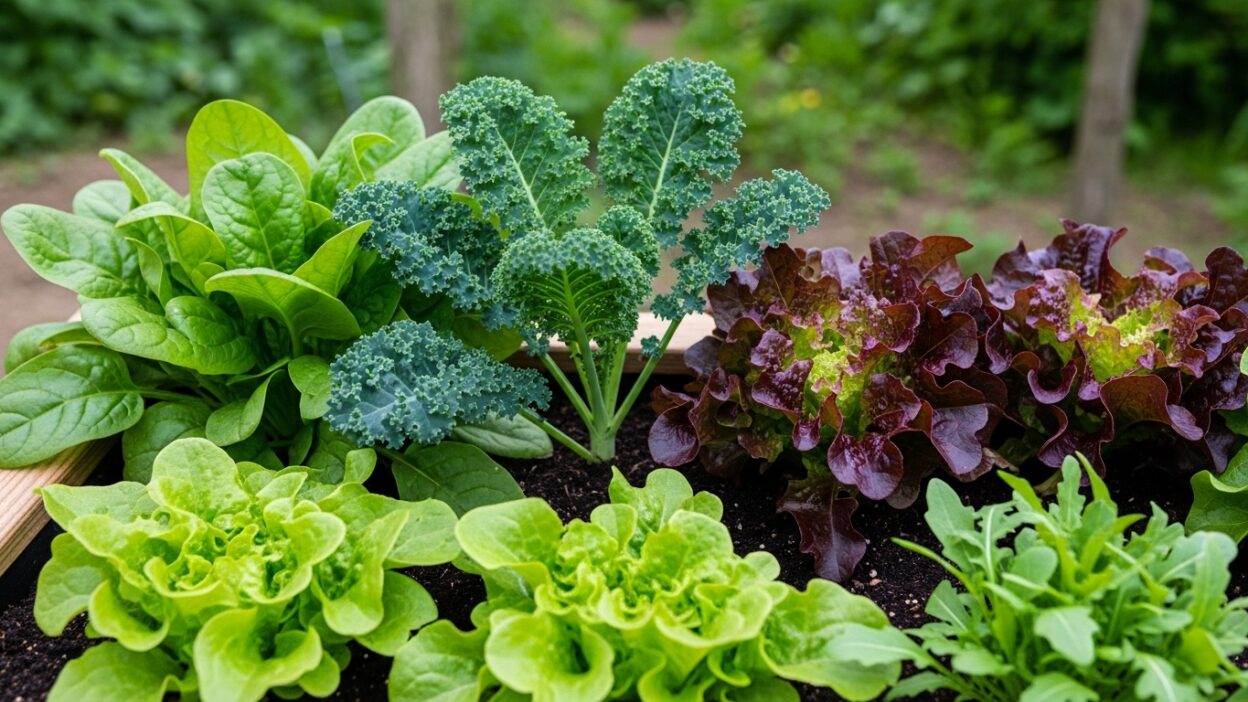
Dinosaur Kale
Scientific name: Brassica oleracea var. palmifolia
Also called Lacinato or Toscano kale, this variety is known for its dark, pebbled leaves that resemble dinosaur skin, as noted on page 4.
When to Plant: Early spring or late summer.
First Harvest: 60 to 65 days, though baby leaves can be picked sooner.
Flavor: Slightly sweet and earthy, less bitter than curly kale.
Season: Thrives in cool weather but tolerates summer heat better than most greens.
Sunlight: Full sun preferred, partial shade acceptable in warm climates.
Fertilizer: Balanced organic fertilizer at planting and mid-season.
Pests/Disease: Cabbage loopers, flea beetles, aphids, and black rot. Use row covers and rotate crops yearly.
Arugula (Rocket)
Scientific name: Eruca sativa
When to Plant: Early spring or fall with soil temperatures between 40°F and 55°F (page 5).
First Harvest: 30 to 40 days.
Flavor: Peppery and slightly spicy. Best harvested young for a fresher, less intense taste.
Season: Prefers cool weather and bolts in heat.
Sunlight: Full sun, but partial shade helps prevent bolting.
Fertilizer: Light feeding at planting is enough.
Pests/Disease: Flea beetles and aphids. Row covers help reduce damage.
Red Oak Leaf Lettuce
Scientific name: Lactuca sativa
When to Plant: Spring and fall with soil between 45°F and 65°F (page 6).
First Harvest: 45 to 55 days.
Flavor: Mild and slightly sweet with a tender, buttery texture.
Season: Cool-season crop but can grow longer with partial shade.
Sunlight: Full sun to partial shade. Shade delays bolting in heat.
Fertilizer: Balanced, water-soluble fertilizer every 4 to 6 weeks.
Pests/Disease: Slugs, snails, powdery mildew, and leaf spot. Good airflow helps prevent problems.
Buttercrunch Lettuce
Scientific name: Lactuca sativa
Page 7 shows a full head of Buttercrunch lettuce with red leaf lettuce on one side and spinach on the other.
When to Plant: Early spring or late summer for fall harvest. Soil 45°F to 65°F.
First Harvest: 55 to 60 days.
Flavor: Sweet and buttery with crisp texture. Excellent for lettuce wraps due to its sturdy, cup-shaped leaves.
Season: Cool weather plant that needs shade during peak summer heat.
Sunlight: Full sun with protection in hot climates.
Fertilizer: Balanced slow-release fertilizer at planting with a mid-season boost.
Pests/Disease: Aphids and rabbits. Floating row covers offer protection.
Romaine Lettuce
Scientific name: Lactuca sativa var. longifolia
When to Plant: Early spring or fall with soil between 40°F and 75°F (page 8).
First Harvest: 65 to 70 days for full heads, sooner for baby leaves.
Flavor: Crisp and slightly bitter. Classic for Caesar salads. Romaine can even be grilled, as noted on page 8.
Season: Prefers cool temperatures but can extend into warmer months with shade and proper watering.
Sunlight: Full sun to partial shade.
Fertilizer: Balanced fertilizer every 4 weeks.
Pests/Disease: Tip burn, aphids, and leaf miners. Proper watering reduces issues.
Swiss Chard
Scientific name: Beta vulgaris subsp. vulgaris
The image on page 9 shows rainbow Swiss chard with colorful stalks.
When to Plant: Early spring through mid-summer with soil between 50°F and 85°F.
First Harvest: 50 to 60 days, with baby leaves available earlier.
Flavor: Mild and slightly sweet. Leaves are tender, while stalks are firm and often brightly colored. For salads, remove the stalks or sauté them separately.
Season: More heat-tolerant than most greens and produces through summer with partial shade.
Sunlight: Full sun to partial shade.
Fertilizer: Compost at planting and balanced fertilizer every 4 to 6 weeks.
Pests/Disease: Leaf miners and beet leafhoppers. Remove affected leaves and use row covers.
Final Thoughts
As mentioned in the closing section on page 10, whether you have a large garden or just a small balcony, these greens can thrive with proper care. They grow quickly, offer continuous harvests, and bring color and texture to your meals.
Mix different greens together for the perfect salad combination. A blend of romaine crunch, arugula spice, buttery lettuce, and tender spinach creates a balanced bowl every time.
Happy planting.