Black Cherry tomatoes have been available in the U.S. for about two decades and have become one of the most loved heirloom cherry varieties for home gardeners. As described in the introduction on page 1, they are known for their rich flavor and striking dark color. Many gardeners grow them year after year because they combine beauty, productivity, and taste.
Tomatoes in general are a staple in backyard gardens because they are both satisfying to grow and incredibly productive. Among the many varieties available, Black Cherry stands out for its deep burgundy tones and complex flavor. The author even mentions on page 1 that it is a personal favorite, ranking it above other popular cherries like Sun Gold.
Getting to Know Black Cherry Tomatoes
Brief History
As explained on page 2, Black Cherry is a relatively modern heirloom developed in the United States. While its exact origin is not fully documented, it was likely created by selectively breeding darker heirloom tomatoes to produce a cherry-sized fruit with the same deep coloration and flavor found in larger black varieties like Black Krim and Cherokee Purple.
Many black tomato types originally trace back to regions such as Ukraine and Russia. The rich color of Black Cherry tomatoes comes from anthocyanins, natural pigments that also contribute antioxidant properties.
Over time, this variety gained popularity among gardeners and chefs for its appearance and reliable taste.
Flavor and Texture
On page 3, the flavor is described as a balanced blend of sweet and tangy with a subtle smoky undertone. This layered taste makes it excellent for fresh eating, especially in salads. A simple Caprese with fresh mozzarella, basil, and balsamic drizzle is highlighted as a favorite use.
Black Cherry tomatoes have a Brix level around 8 to 10, placing them among the sweeter cherry varieties.
Texture is equally important. As discussed on page 3, cherry tomatoes can sometimes be too tough or too mushy. The ideal tomato has a firm skin that breaks easily without feeling papery or chewy. Black Cherry scores high here, offering a juicy interior with a satisfying “pop” when bitten.
Environmental conditions can influence texture. Page 4 explains that after heavy rain, tomatoes may become slightly waterlogged and softer. For the best flavor experience, taste them after a warm, dry stretch of weather.
Planting and Growing Black Cherry Tomatoes
Seed Selection and Preparation
Choose high-quality seeds from a trusted supplier or fellow gardener. As noted on page 4, if starting from seed feels overwhelming, purchasing starter plants from a garden center is perfectly fine. However, Black Cherry transplants can sometimes be difficult to find locally, making mail-order a common option.
Tomatoes are self-pollinating, meaning a single plant can produce fruit on its own.
Ideal Growing Conditions
Page 5 outlines the best conditions:
• Temperature range: 65 to 85°F
• Soil temperature above 60°F before planting outdoors
• Full sun exposure, at least 6 to 8 hours daily
• Well-draining soil rich in compost
• Soil pH between 6.0 and 6.8
Mixing garden soil with compost and well-rotted manure creates an excellent planting medium.
Planting Techniques
Transplant seedlings outdoors once frost risk has passed and they have at least two sets of true leaves. The author prefers waiting until plants have three or more leaf pairs to allow for deeper planting.
Tomatoes can form roots along buried stems. As described on page 6, removing lower leaves and planting the stem deeply encourages stronger root systems. Dig a deep hole, water it to check drainage, mix compost into the soil, and bury the plant up to the lowest leaf pair.
If digging deeply is difficult due to rocky or clay soil, you can plant at a slight angle and gently bend the stem upright.
Before planting out, gradually harden off indoor seedlings by exposing them to outdoor conditions for a few hours daily over several days.
Caring for Black Cherry Tomato Plants
Watering and Nutrition
Provide about 1 to 1.5 inches of water per week during dry periods. Direct water at the soil rather than the leaves to reduce disease risk.
At planting time, use a balanced slow-release fertilizer. Page 6 mentions side-dressing with additional fertilizer or fish emulsion once fruits begin forming.
Pruning
Although it may seem counterintuitive, pruning helps production. As explained on page 7, tomato plants produce many leafy branches that will never flower. Removing suckers and lower yellowing leaves directs energy toward fruit production and improves airflow.
Staking and Support
Black Cherry tomatoes are vigorous growers. The author notes on page 7 that plants can easily exceed 10 feet in height. In the image on page 8, vines climb over an 8-foot fence and continue growing beyond it.
Use sturdy cages, stakes, or trellises. Avoid cutting the main stem late in the season, as this may stop production on that branch.
Pest and Disease Management
Common Insect Pests
According to page 9, common pests include:
• Aphids
• Hornworms
• Whiteflies
A strong spray of soapy water can control aphids and whiteflies. Hornworms can be removed by hand. Natural predators such as ladybugs and parasitic wasps are helpful allies. Neem oil or insecticidal soap can also be used when necessary.
The photo on page 9 clearly shows a large hornworm, which can quickly strip leaves if left unchecked.
Diseases
Tomatoes are vulnerable to bacterial wilt and fusarium wilt. These diseases often persist in soil. Once symptoms appear, plants usually cannot be saved. Crop rotation is the most effective long-term strategy.
Wildlife Challenges
Pages 9 and 10 describe squirrels, chipmunks, and deer as major tomato thieves. The photo on page 10 humorously shows a squirrel enjoying tomatoes from atop fencing.
While protective cages can help, they may also make harvesting difficult. Many gardeners simply grow extra plants to compensate for wildlife losses.
Harvesting Black Cherry Tomatoes
Determining Ripeness
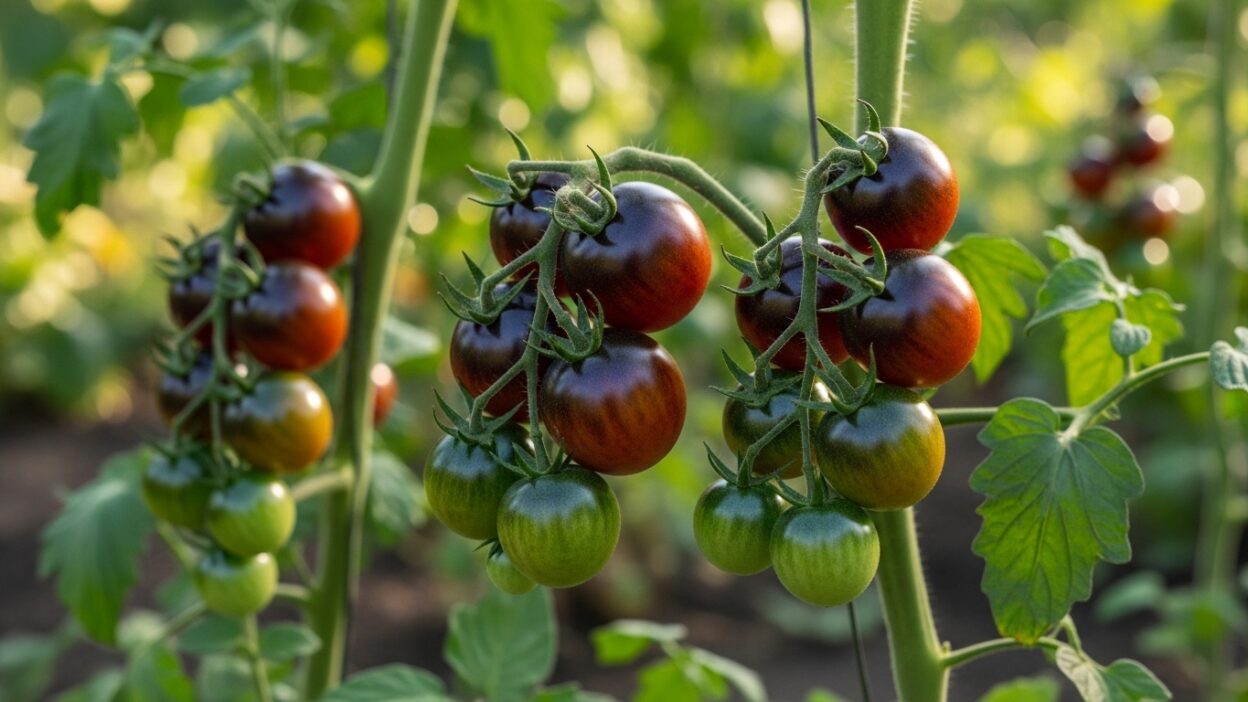
As shown on page 11, ripe Black Cherry tomatoes turn deep burgundy, often with darker green shoulders. They should feel firm but not hard.
This variety can split if left too long on the vine. Harvest slightly before peak softness. Sweetness develops once the fruit begins turning reddish, so it can finish ripening indoors.
Before heavy rain, harvest nearly ripe fruit to prevent cracking.
Harvesting Techniques
Cherry tomatoes are delicate. To keep them fresh longer, leave the stem attached.
Use scissors or shears to snip just above the sepals. If harvesting by hand, press at the elbow joint above the tomato rather than twisting. The image on page 11 highlights these elbow joints and sepals clearly.
If the entire truss is ripe, cut the whole cluster close to the main stem.
Storing and Preserving
Room Temperature Storage
As noted on page 12, store tomatoes at room temperature away from direct sunlight for up to one week. Refrigeration reduces flavor and affects texture.
Freezing and Canning
For longer storage, freeze whole tomatoes individually on a tray before transferring them to freezer containers.
Thawed tomatoes become soft and are best used in cooking. Their skins slip off easily once thawed, making them ideal for sauces and tomato paste. The image on page 12 shows a tray of Black Cherry tomatoes prepared for preserving.
Black Cherry tomatoes combine exceptional flavor, rich color, and impressive productivity. With proper care, support, and timely harvesting, they can become one of the most rewarding plants in your garden.
Happy tomato growing.