Cilantro and flat-leaf parsley look so similar that many cooks and gardeners mix them up. At first glance, their leafy tops appear almost identical. They are even related plants. But once you understand their flavor, growth habits, and structure, the differences become clear.
This guide breaks down everything you need to know, from taste and plant life cycle to stem shape and seed germination, so you can confidently choose the right herb for your kitchen and garden.
Understanding the Names
In the United States, the green leafy part of the cilantro plant is called cilantro. In many other countries, especially in Europe and India, those same leaves are called coriander. In the U.S., coriander usually refers to the dried seeds of the plant.
When we talk about parsley here, we mean flat-leaf parsley, also known as Italian parsley. Curly parsley exists, but it has a milder flavor and is mostly used as decoration rather than for strong culinary flavor.
Botanical Background
Cilantro (Coriandrum sativum) and parsley (Petroselinum crispum) both belong to the Apiaceae family. This plant family also includes carrots, dill, fennel, celery, cumin, and parsnips.
Many plants in this family produce umbrella-shaped flower clusters called umbels. These flowering heads later develop seeds.
Although cilantro and parsley are relatives, their growth patterns are very different.
Flavor Differences
Cilantro Flavor
Cilantro has a bright, fresh, citrus-like taste with a slightly peppery edge. It is essential in salsa, guacamole, curries, and many Latin and Asian dishes.
Some people experience cilantro as tasting soapy or metallic. This reaction is linked to natural compounds called aldehydes and is influenced by genetics. For those who enjoy it, cilantro adds a powerful burst of freshness to food.
Parsley Flavor
Flat-leaf parsley has a clean, grassy, slightly bitter taste with mild pepper notes. It is less intense than cilantro and blends well into many dishes.
Parsley works beautifully in Italian, Mediterranean, and Middle Eastern cooking. It is often used generously rather than just as a garnish.
Plant Life Cycle
Cilantro Growth Pattern
Cilantro is an annual plant. It grows from seed, produces leaves, flowers, and seeds all within one season, then dies.
It prefers cool weather. As soon as temperatures rise, especially in early summer, cilantro quickly bolts. Bolting means the plant shifts from leaf production to flowering and seed production.
This can be frustrating for gardeners because cilantro’s short season often does not overlap with summer vegetables like tomatoes and peppers.
The good news is that cilantro produces seeds easily. Young green seeds are edible and flavorful. Mature brown seeds can be harvested as coriander spice or saved for replanting.
Parsley Growth Pattern
Parsley is a biennial plant. That means it takes two years to complete its life cycle.
In its first year, parsley produces plenty of leafy growth. In the second year, it sends up tall stems with large yellow flower clusters and produces seeds before dying.
Many gardeners treat parsley as an annual and replant each year. However, if you allow second-year plants to flower and drop seeds, new plants can grow naturally the following season.
Second-year parsley leaves tend to be thinner and less flavorful than first-year leaves.
Growing Conditions
Cilantro Growing Needs
Cilantro thrives in cool spring weather. It prefers loamy, well-drained soil and consistent watering.
Because it bolts quickly in heat, plant it as early as possible in spring. In some climates, you may attempt a fall crop if temperatures cool down.
Even short heat waves can trigger flowering. Once cilantro bolts, leaf production slows dramatically.
Parsley Growing Needs
Parsley is more tolerant of varying conditions. It grows well in full sun or partial shade and prefers rich, well-drained soil.
Parsley seeds take longer to germinate than cilantro seeds. Soaking them overnight before planting can help speed up sprouting.
Once established, parsley can tolerate cold temperatures surprisingly well. With protection, it may even survive through parts of winter in mild climates.
Seed Germination
Cilantro Seeds
Coriander seeds germinate easily when planted about half an inch deep. Because cilantro’s season is short, planting early gives you more time for harvesting.
If allowed to flower and seed, cilantro can self-seed naturally.
Parsley Seeds
Parsley seeds germinate more slowly and require patience. Young seedlings grow slowly at first, but once established, parsley produces leaves for a long period.
Buying parsley starter plants can be worthwhile because of its long growing season.
Leaf Appearance
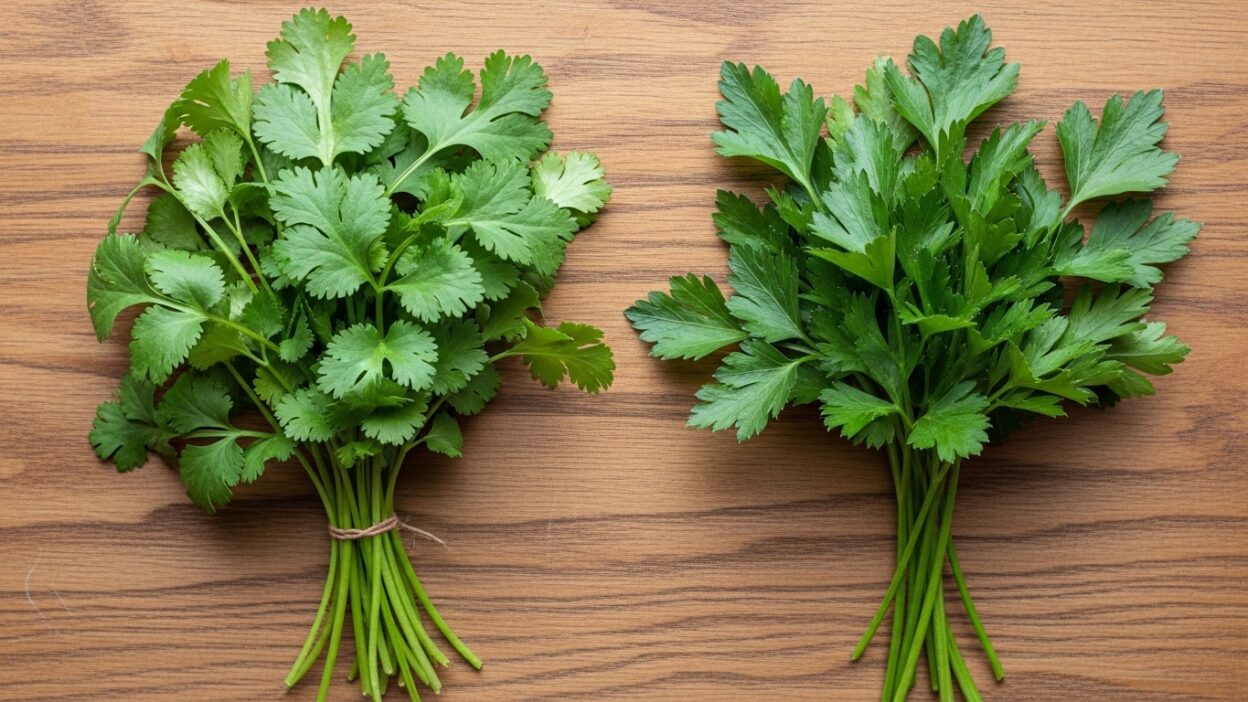
At first glance, cilantro and parsley leaves look very similar. However, small details make identification easier.
Cilantro leaves are more rounded and curved. The edges of each lobe appear softer and smoother. A simple memory trick is “C for cilantro, C for curved.”
Parsley leaves are more pointed and sharper in shape. The leaf tips often come to small points. You can remember “P for parsley, P for pointy.”
When looking at a whole bunch in the grocery store, cilantro tends to look softer and rounder, while parsley appears more spiky and structured.
Stem Differences
Another clear difference is in the stems.
Cilantro stems are thin, flexible, round, and hollow.
Parsley stems are thicker and have a triangular shape.
Both stems are edible. Cilantro stems can handle cooking well and are often chopped into dishes along with onions and garlic. Parsley stems can be used fresh or cooked along with the leaves.
Final Thoughts
Cilantro and parsley may look alike, but they differ in flavor, growing habits, life cycle, and structure.
Cilantro is bold, citrusy, and fast-growing but sensitive to heat. Parsley is steady, versatile, and more tolerant of different conditions.
Understanding these differences helps both cooks and gardeners choose the right herb for each dish and planting season.