If you see thistle growing in your vegetable garden, take it seriously. It may look like just another weed, but thistle is strong, stubborn, and very hard to remove once it spreads. The leaves are sharp and covered with thin spines that can hurt your hands. But the real problem is not what you see above the soil. The real battle is happening underground.
Thistle is known for its powerful root system. Many weeds spread by seeds, and thistle does that too. Its flowers produce seeds that can travel by wind, birds, or even on your clothes. But seeds are not its main weapon. The real reason thistle is so hard to control is its roots.
When a thistle plant is only a few days old, it already sends a thick taproot straight down into the soil. As this root grows deeper, it also sends out side roots that spread in many directions. These horizontal roots can stretch very far from the main plant. Along these roots, small buds can form. Each bud has the ability to grow into a brand new thistle plant. That means even if you remove one plant, several more can appear around it later.
This is why simply pulling a thistle out of the ground usually does not solve the problem. If the root snaps, even a small piece left in the soil can grow again. Tilling the soil can make things worse. Instead of killing the plant, tilling often breaks the roots into many small pieces and spreads them around the garden. Each piece can grow into a new plant.
Some people recommend using strong chemical herbicides to kill thistle. Deep tilling followed by spraying chemicals can damage the roots. However, this method is harsh and not suitable for an organic vegetable garden. Chemicals may kill the green leaves above ground, but they often fail to completely destroy the deep root system. For gardeners who want to grow food safely and naturally, there are better ways.
The most effective way to control thistle without chemicals is to remove it by hand while it is still young. Young plants have smaller root systems, which makes them easier to dig out completely. Timing is very important. The earlier you act, the better your chances of success.
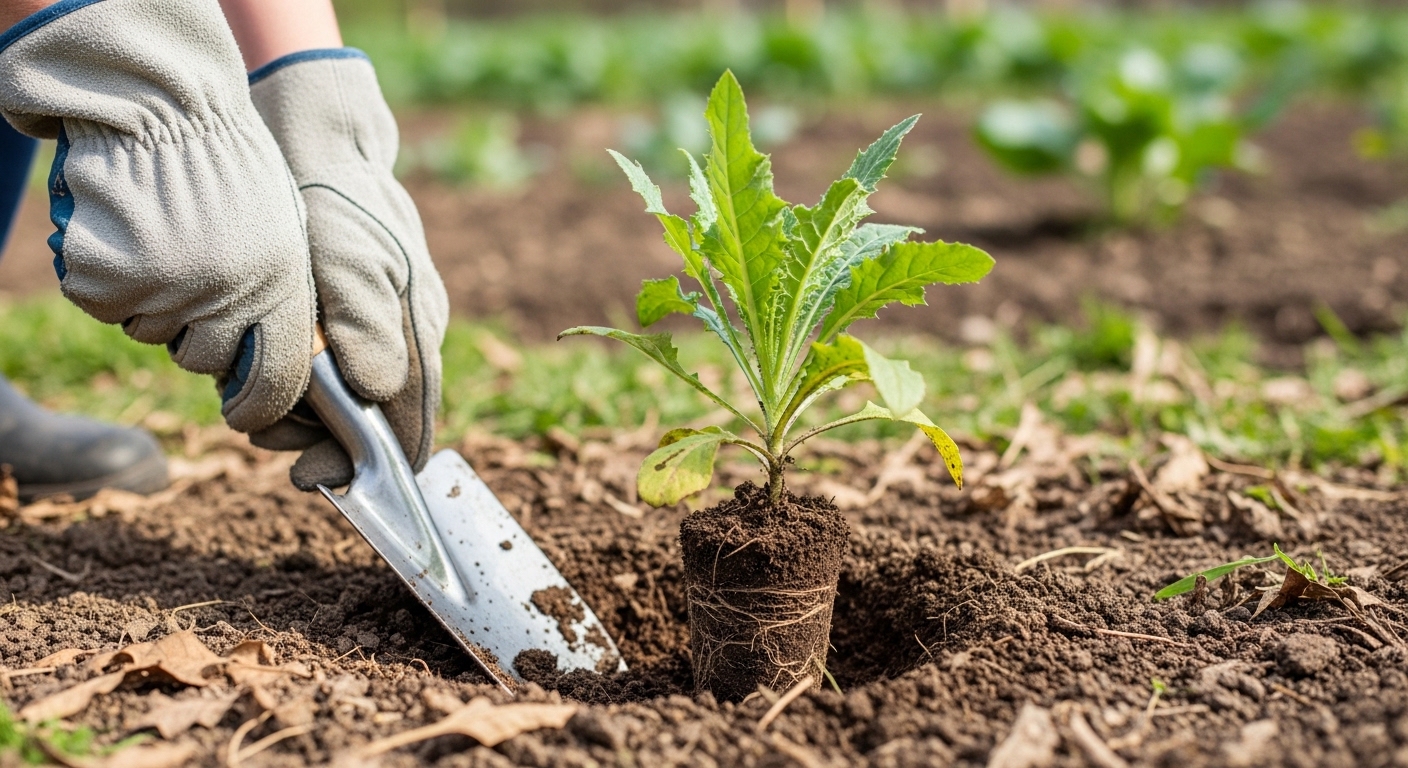
You do not need many special tools. A thick gardening glove is very important because the plant has sharp spines. A sturdy hand shovel with a pointed tip works best. Some gardeners also use a long garden knife to help cut into the soil.
To remove a thistle, start by pushing your shovel straight down into the soil about two inches away from the base of the plant. If the soil is loose, you may be able to loosen it easily. If the soil is hard or compact, make a few more cuts around the plant in a small circle. This helps break the soil and gives you better access to the root.
Next, push the shovel deeper under the plant and gently lift the soil from below. Do not rush this step. The goal is to loosen the entire root system before pulling. Once the plant feels unstable, hold the base of the leaves firmly with your gloved hand and slowly pull upward. If you feel strong resistance, stop pulling and dig deeper again. Forcing it may cause the root to snap.
Sometimes you may hear or feel a small snap while pulling. That usually means the taproot has broken. When this happens, try to dig deeper and remove the remaining root piece if possible. Older plants are more likely to break because their roots are thicker and longer.
With practice, removing thistle becomes easier and faster. After clearing one area, continue checking your garden regularly. Thistle can reappear from roots that were missed or from seeds that have landed in the soil.
Long term control requires patience. Even if you clear an entire bed, new plants may appear at the edges later. One helpful method is to reduce the amount of exposed soil. Weed blocking fabric or landscaping cloth can be placed over empty areas. You can cut holes in the fabric where you want to plant vegetables. This limits the sunlight reaching the soil and makes it harder for thistle to grow.
You can also place fabric in walkways and between rows. The less open soil you have, the fewer chances thistle has to establish itself. Some plants may still push through, but their growth will be weaker and easier to manage.
In shared or community gardens, controlling thistle can be more difficult because everyone must stay consistent with weeding. If some areas are ignored, the plant can spread again. However, with steady weekly checking and quick removal of new sprouts, thistle can be controlled without using chemicals.
Thistle is tough, but it is not unbeatable. The key is early action, careful digging, and regular monitoring. With patience and consistency, you can protect your vegetable garden and keep this aggressive weed under control naturally.