Who doesn’t enjoy a little heat in their food? Jalapeño peppers bring bold flavor and just the right amount of spice to backyard gardens, patios, and even small balconies. They’re productive, attractive plants and one of the easiest hot peppers for home gardeners to grow. If you love salsa, tacos, nachos, or poppers, jalapeños are a must.
Jalapeños are one of my favorite peppers to plant each year. The plants stay fairly compact, so I can always squeeze one into the garden, though I often grow a single plant in a large container. They’re leafy, vibrant green, and consistently produce plenty of peppers all season long.
They’re also surprisingly low-maintenance. Compared to many vegetables, jalapeños rarely attract serious pest problems and usually grow happily without much fuss.
And once tomato season begins, fresh jalapeños become essential for homemade salsa.
Starting from Seed or Buying a Plant
Should you grow jalapeños from seed or pick up a starter plant? Either option works well.
Peppers are simple to start from seed in late spring. If you’ve grown tomatoes from seed, the process is nearly identical. With warmth, light, and consistent moisture, seedlings establish quickly.
If you prefer convenience, jalapeño starter plants are widely available at garden centers and even home improvement stores. Occasionally, you may even find unique varieties, such as purple jalapeños.
Container or Garden Bed?
Jalapeños adapt easily to both garden beds and containers.
If planting in the ground, use rich, loose soil amended with compost and peat. Good drainage is critical. A simple way to test this is to dig a hole and partially fill it with water. The water should drain steadily rather than pooling.
Personally, I grow most of my chile peppers in 14-inch pots using a mix of:
-
1 part potting soil
-
1 part compost
-
1 part peat moss
-
1 part perlite
-
A handful of Plant-tone fertilizer
Choose sturdy containers with drainage holes. Adding a layer of pebbles at the bottom can help anchor the pot. Jalapeño plants can grow two feet tall or more and may become top-heavy once loaded with fruit.
Although jalapeños have strong central stems, staking or caging provides extra support. A single stake works, but cages help hold up heavy branches filled with peppers.
How Many Plants Do You Need?
Jalapeños belong to the nightshade family, along with tomatoes and potatoes. Like other nightshades, their flowers contain both male and female parts, meaning they are self-pollinating.
Because of this, you can grow just one plant and still harvest plenty of peppers.
Sunlight, Water, and Feeding
Jalapeños love sunshine. Plant them where they receive at least six hours of full sun daily, ideally during the strongest midday hours.
Keep soil consistently moist but not soggy. Water when the top inch of soil feels dry. In hot weather, especially for container-grown plants, this may mean watering every day.
Containers dry out faster than garden beds, so check them often. Avoid overwatering, which can lead to root rot.
If you live in a very warm climate, you can use ollas, even in containers, to help regulate moisture.
For feeding, use a balanced vegetable fertilizer according to label instructions, typically every two to three weeks. Feeding is especially important during flowering and fruiting when the plant is producing heavily.
Peppers also appreciate magnesium. Sprinkling a tablespoon of Epsom salts around the base of an established plant once a month and watering it in can support strong growth and fruit production.
Annual or Perennial?
In hardiness zones 2 through 9, jalapeños are grown as annuals because winter temperatures are too cold for them to survive. In warmer zones 10 and 11, they can grow nearly year-round.
How Hot Are Jalapeños?
Heat is measured using the Scoville Heat Unit scale. Jalapeños typically range between 2,500 and 8,000 SHU, depending on variety and growing conditions.
This places them in the medium-heat category. They’re spicier than bell peppers, which have zero heat, but far milder than habaneros or ghost peppers.
Even though they aren’t extremely hot, avoid touching your eyes after handling them, especially when slicing.
When Is a Jalapeño Ripe?
Jalapeños can be eaten at any stage.
Most are harvested green, which is how they’re commonly sold. Green jalapeños have a fresh, slightly bitter flavor with crisp heat.
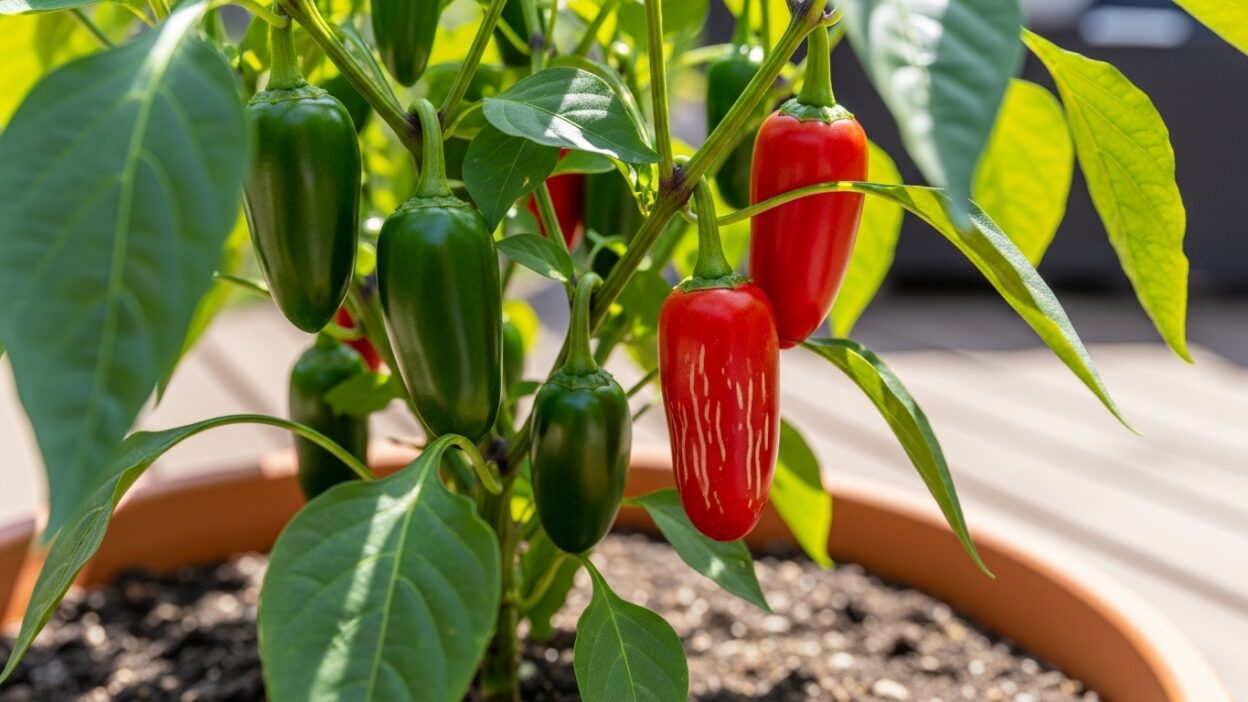
If left on the plant longer, they turn bright red. Red jalapeños are hotter but also slightly sweeter, much like the difference between green and red bell peppers.
You can also harvest them during the color transition stage for a balance of heat and sweetness.
Fun fact: Chipotle peppers are simply fully ripened red jalapeños that have been smoked and dried. The smoking adds flavor, not additional heat.
Sometimes you’ll notice thin white lines on the skin of a jalapeño. These striations occur when the fruit grows quickly, often after mild stress like a cool night. They’re perfectly safe to eat and often indicate strong flavor.
Harvesting Jalapeños
Jalapeños hang from narrow stems, and it can be tempting to pull them off. However, pulling may damage the plant.
Instead, use scissors or garden shears to snip the stem cleanly. Proper harvesting helps the plant continue producing peppers throughout the season.
If you’re sensitive to capsaicin, the compound that creates heat, wear gloves when harvesting and handling peppers.
Troubleshooting Common Issues
If leaves turn yellow or begin dropping, it could signal watering problems or nutrient deficiency. Adjust your watering schedule and consider feeding with a balanced fertilizer.
Leggy or weak plants usually need more sunlight. Aim for six to eight hours daily.
If you notice holes in leaves or fruit, pests may be the cause. Aphids, cutworms, and occasionally pepper maggots can attack plants. Neem oil, insecticidal soap, or beneficial insects like ladybugs can help manage infestations.
Jalapeños aren’t just great in salsa. They add bold flavor to soups, chili, tacos, burritos, and are delicious pickled.
Including jalapeños in your garden adds color, productivity, and a little excitement to your cooking. They’re also a perfect introduction to the world of hot peppers.
Let your spicy gardening season begin.