Tomatoes are one of the most popular vegetables grown in home gardens, and for good reason. They’re flavorful, versatile, and surprisingly efficient when it comes to reproduction. One of their most useful traits is that they can pollinate themselves.
If you’ve ever wondered whether you need bees buzzing around your tomato plants to get fruit, the short answer is no. Tomato plants are naturally self-pollinating, which makes them dependable producers in backyard gardens, container setups, and even greenhouses.
The question actually came up during a lighthearted conversation about protecting tomato plants from squirrels and chipmunks. While discussing ways to keep critters out, the topic shifted to bees. Would blocking access affect fruit production? The answer led to an important gardening fact: tomatoes don’t rely on bees to produce fruit.
Yes, Tomatoes Are Self-Pollinating
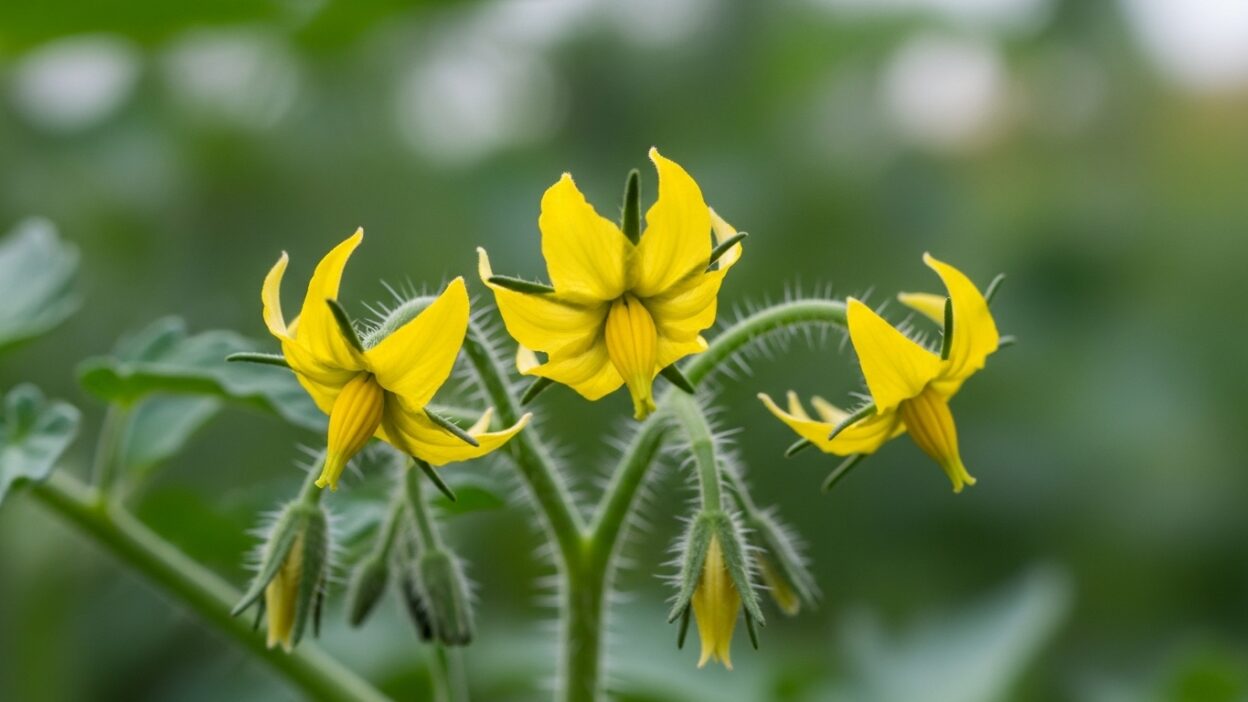
Tomato flowers are what botanists call “perfect flowers.” That means each individual flower contains both male and female reproductive parts.
Inside every tomato flower you’ll find:
-
The stamen (male part), which produces pollen
-
The pistil (female part), which includes the stigma and ovary
-
Ovules, which develop into seeds after fertilization
Because both reproductive organs exist within the same flower, tomatoes are predominantly self-pollinating.
In fact, most members of the nightshade family are self-pollinating, including peppers, eggplants, and okra. Potatoes also self-pollinate, although their edible tubers don’t rely on that process.
This trait is especially helpful if you grow tomatoes in containers or areas where pollinators are scarce.
How Tomato Pollination Works
Understanding the process makes it easier to troubleshoot fruiting problems.
Flower Structure
Tomato flowers have a unique design. The stamen forms a cone-like structure around the pistil. This creates a small, enclosed space that keeps pollen close to the stigma.
When the flower matures, pollen is released from the anthers. Because everything is so tightly arranged, the pollen doesn’t have far to travel to reach the stigma.
The Role of Vibration
Although tomatoes don’t need bees to transfer pollen from plant to plant, they do benefit from movement.
Pollen is released more easily when the flower is shaken. This can happen through:
-
Wind
-
Insects landing on the flowers
-
Physical vibration from touch
Interestingly, when bees visit tomato flowers, they aren’t necessarily carrying pollen from one plant to another. Instead, the vibration from their movement helps shake pollen loose inside the flower.
Even without bees, tomatoes can still set fruit. But gentle movement improves the process.
Fertilization and Fruit Formation
Once pollen reaches the stigma, it begins to grow a pollen tube down into the ovary. Fertilization occurs when sperm cells from the pollen combine with the ovules.
This process leads to:
-
Seed development
-
Formation of the surrounding tomato fruit
While self-pollination is standard, cross-pollination between different tomato varieties can still occur, especially with heirloom types that have more open flowers. However, this doesn’t affect the current season’s fruit. It only matters if you plan to save seeds for next year.
How to Hand-Pollinate Tomatoes
Compared to crops like squash, hand-pollinating tomatoes is extremely simple.
All you need to do is:
-
Find a truss (cluster) with fully open flowers.
-
Gently grasp the truss.
-
Give it a light shake.
That small movement releases pollen inside the flower, increasing the chances of successful fertilization.
Doing this once a week, especially for flowers tucked inside dense foliage, can help improve fruit set.
This method is particularly useful if:
-
You’re growing tomatoes indoors
-
Plants are sheltered from wind
-
Pollinator activity is low
-
You’re experiencing blossom drop
Frequently Asked Questions
Do I need multiple tomato plants for pollination?
No. Because tomato flowers contain both male and female parts, a single plant can produce fruit on its own. Planting multiple varieties may increase overall yield, but it’s not required for pollination.
Why are my tomato flowers dropping without producing fruit?
This issue, called blossom drop, can happen for several reasons:
-
Temperature swings
-
Poor pollination
-
Too much nitrogen fertilizer
-
Inconsistent watering
To reduce blossom drop:
-
Water consistently
-
Use balanced fertilizer
-
Ensure plants receive full sun
-
Shake flower clusters weekly
Can tomatoes produce fruit without insects or wind?
Yes. Their flower structure supports self-pollination even in still air. However, vibration improves pollen release. In greenhouses or very sheltered spaces, manually tapping or shaking branches can boost fruit set.
If you’re short on garden space and only have room for one tomato plant, don’t worry. Pollination won’t be your problem.
Tomatoes are built to handle that part on their own. Happy gardening.