Cucamelons, also called Mexican sour gherkins (Melothria scabra), are one of the most charming vegetables you can grow. These tiny fruits look like miniature watermelons on the outside, but when you slice them open, they resemble cucumbers inside. Their flavor is fresh and crisp, like cucumber with a splash of lime.
They’re proof that the garden is full of surprises. Small in size but big in personality, cucamelons quickly become a conversation starter once friends see them growing on the vine.
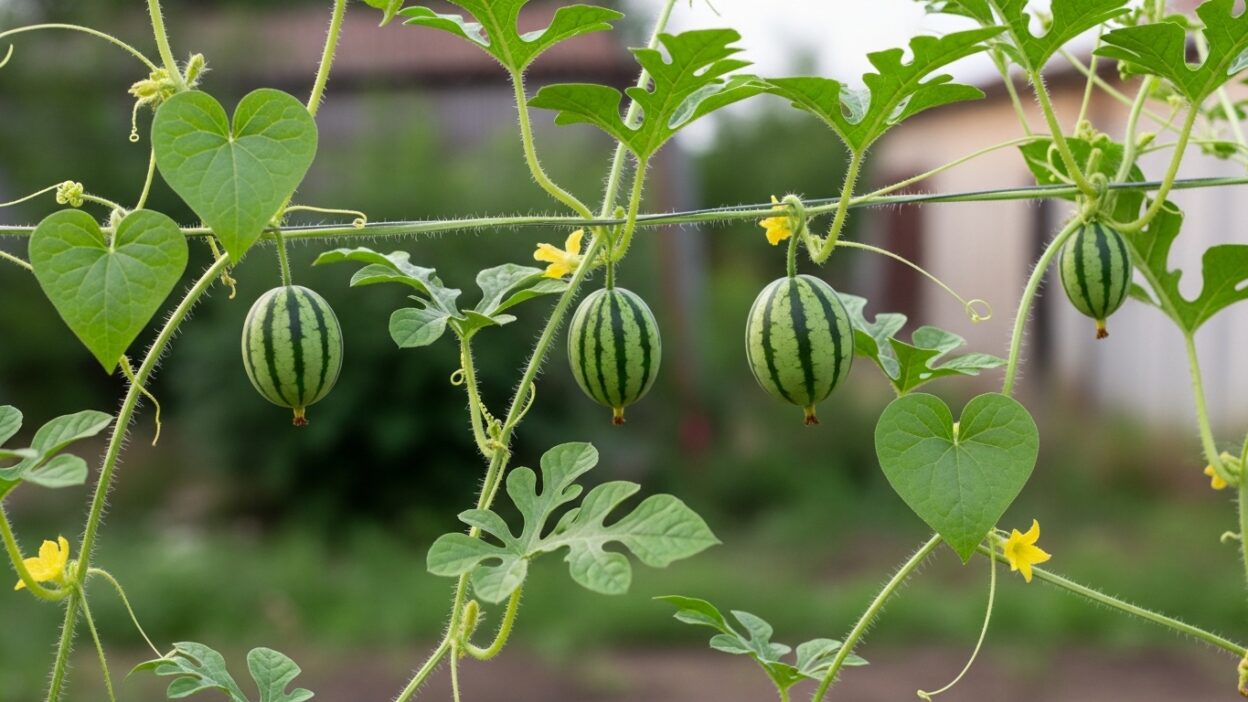
Although they’re related to cucumbers, they’re much smaller, about the size of a grape tomato. Their patterned skin creates the illusion that the inside will be pink like a watermelon. Instead, you’ll find pale green flesh with tiny seeds and a refreshing citrus bite.
What the Plant Looks Like
Cucamelons grow as energetic climbers, much like cucumbers. They produce thin, slightly spiky vines and large heart-shaped leaves. The bright yellow flowers are small but appear in large numbers.
Once fruiting begins, the plant can produce heavily. A single vine can generate dozens of tiny fruits throughout the season.
How to Start Cucamelons from Seed
Cucamelon plants are rarely sold as starter plants in garden centers, so growing from seed is usually the best option.
They can be grown either in the ground or in containers. Personally, containers work especially well. The vines are delicate and easier to manage when they trail downward from a pot rather than climb aggressively upward.
Cucamelons are slower to establish than cucumbers. Growing them in containers gives them some protection from unpredictable spring weather and strong winds.
If sowing outdoors directly, wait until both daytime and nighttime temperatures stay well above 50°F. Plant seeds about ½ inch deep in loose, compost-rich soil.
Starting Seeds Indoors
For a head start, sow seeds indoors in small pots filled with seed-starting mix, planting them about ½ inch deep.
Using a humidity dome helps maintain moisture while seeds sprout. A warming mat underneath the trays can significantly speed up germination. Seeds often sprout within five days when kept warm and consistently moist.
When seeds are started outdoors in cool, shifting spring weather, germination can take more than two weeks. Indoor starting allows better moisture control and faster results.
Keep soil evenly moist but not soggy. Without a dome, you’ll likely need to water daily to prevent drying out.
Seedlings are ready for transplanting once they develop their first true leaves. Be gentle with their roots. If using compostable pots, you can cut off the bottoms and plant the entire pot into a larger container, making it easier for roots to expand.
Growing in Containers
Cucamelons adapt beautifully to window boxes, patio containers, and deck planters. Their vines cascade attractively over the edges, creating a lush curtain of greenery and fruit.
Avoid moisture-control soil blends unless you live in an extremely dry climate. Those mixes stay wet for too long and can cause mold in humid areas.
Instead, combine standard potting soil with compost and stay attentive to watering, especially while plants are young.
Transitioning Seedlings Outdoors
When moving seedlings outside, do it gradually. Young plants can be sensitive to intense sun.
Introduce them to several hours of late-morning sunlight, then return them to shade during the hottest part of the afternoon. Shiny or bleached spots on leaves indicate sunburn.
Be patient during this adjustment period. Once established, cucamelons thrive in full sun.
How to Care for Cucamelons
As vines begin stretching out, feed plants every other week with a general vegetable fertilizer. There’s no need for complicated nutrient ratios unless you know your soil has specific issues.
Keep the soil consistently moist throughout the growing season. During hot, dry stretches, daily watering may be necessary, especially for container-grown plants.
With proper care, cucamelons will climb and sprawl happily, producing fruit steadily.
Harvesting and Using Cucamelons
Cucamelons are best picked when fully formed but still firm and bright green. They can be eaten straight from the vine.
They’re perfect in salads, served as part of a vegetable platter, or chilled for a refreshing afternoon snack. Their mild citrus tang pairs beautifully with dips and light dressings.
They’re also excellent for pickling.
Cucamelons are both ornamental and productive, making them a delightful addition to any vegetable garden. Their unique appearance, refreshing flavor, and steady harvest make them well worth growing.