Sugar snap peas are one of the easiest and most rewarding crops you can grow in early spring. Their crisp, sweet pods are perfect for snacking straight from the vine, tossing into salads, or quickly stir-frying. If you’re looking for a cool-season vegetable that delivers fast results and beautiful vertical growth, sugar snap peas are a great choice.
Sugar snap peas (Pisum sativum) are a cool-weather crop that thrives in early spring. They tolerate frost and chilly temperatures surprisingly well, which makes them one of the first substantial vegetables you can harvest after winter. They’re not quite as quick as radishes, but they mature well before most summer crops and help bridge that seasonal gap with crunchy sweetness.
For gardeners, they’re fairly low-maintenance. Most of the work happens at planting time: sowing seeds and setting up supports. After that, it’s mostly about keeping the soil moist and waiting patiently for the first pods.
Choose the Right Variety
There are many sugar snap pea varieties available, so take some time to choose what works best for your space and climate.
These plants prefer cool conditions. If you live in a region with cool springs, you’ll have plenty of options. In warmer spring climates, look for varieties bred to handle slightly higher temperatures.
Other things to consider include:
-
Sweetness level of the peas
-
Texture and sweetness of the pods
-
Whether the variety is stringless or may need strings removed
-
Dwarf vs. tall vining types
Dwarf varieties stay compact and can sometimes support themselves, making them ideal for containers. Most snap peas, however, grow long vines that need vertical support and space to climb. They’re lightweight and easy to train on a trellis.
Planting at the Right Time
Sugar snap peas need to complete their entire life cycle before summer heat arrives.
You can sow seeds as soon as the soil can be worked in early spring, usually about a month before your last expected frost. Seeds typically sprout within 7 to 14 days, depending on soil temperature. Expect to harvest around 60 days after planting.
Preparing the Soil
Choose a location with full sun, though partial shade is acceptable if necessary.
Since snap peas grow quickly and feed heavily during their short season, focus on building healthy soil instead of relying heavily on fertilizers. Mix in compost to improve soil texture and nutrition. A balanced granular fertilizer can be added at planting time if desired.
Good drainage is essential. Peas do not tolerate soggy soil.
Sowing the Seeds
Plant seeds 1 to 2 inches deep and space them about 4 inches apart. Cover firmly with soil and water thoroughly.
If planting in rows, space rows at least 18 inches apart. This gives you enough room to install support structures and access plants easily during harvest.
Providing Support
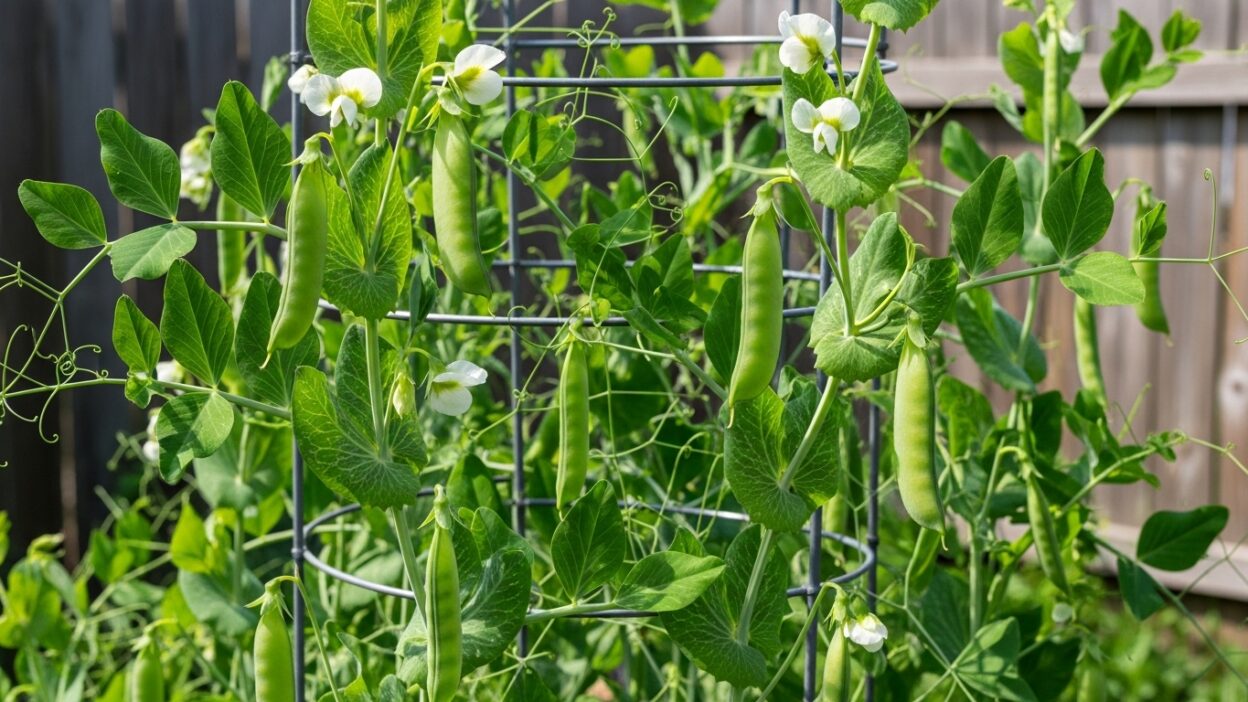
Install a trellis, fence, or vertical netting at planting time, placing it directly behind the seed row. Tall varieties begin climbing soon after sprouting, and setting supports early prevents root disturbance later.
Make sure your support is tall enough. Many snap pea varieties can easily grow taller than five feet.
You don’t need to tie the vines manually. Their tendrils naturally wrap around nearby structures and secure themselves.
Watering
Keep the soil consistently moist but never waterlogged. Water at the base of the plants to avoid wetting foliage, which can lead to disease.
During warm or dry spells, you may need to water more frequently.
Fertilizing
Sugar snap peas fix nitrogen from the air, so they generally don’t require additional nitrogen fertilizer. If plants appear stunted or slow to bloom, you can side-dress with compost or apply a balanced fertilizer.
Harvesting Sugar Snap Peas
Sugar snap peas are ready about 60 to 70 days after planting, depending on the variety.
Harvest when pods are plump, bright green, and firm. You should be able to see or feel the fully formed peas inside the pod.
Pick regularly to encourage continued production. Healthy plants will keep producing until hot summer temperatures slow or stop growth.
Troubleshooting Common Problems
While snap peas are easy to grow, a few issues can appear during the season.
Pests
Aphids are the most common pest. They cluster on stems and undersides of leaves, sucking plant sap and sometimes spreading disease. A strong spray of water can remove them, and beneficial insects like ladybugs help keep populations down.
Pea weevils may feed on leaves and roots, reducing vigor. Slugs and snails chew holes in leaves and young seedlings.
Use organic methods such as insecticidal soap, slug traps, and encouraging beneficial insects when needed.
Diseases
Fusarium wilt is a serious soil-borne fungal disease that causes yellowing and wilting. It can persist in soil for years. Remove and destroy infected plants promptly.
Powdery mildew appears as white powdery spots on leaves and stems. Root rot, caused by excess moisture and fungal pathogens, leads to stunted growth and yellowing.
Prevent disease by rotating crops yearly, spacing plants properly for airflow, and avoiding overwatering.
Environmental Issues
-
Poor germination can result from cold, overly wet soil or planting too deeply.
-
Blossom drop may occur during extreme heat or temperature swings.
-
Leggy growth usually indicates insufficient sunlight.
Prevention is key: plant resistant varieties when available, maintain well-draining soil, space plants correctly, and remove infected material quickly.
Frequently Asked Questions
What do pea seeds look like?
The seeds are simply dried peas. They often look wrinkled, which is normal.
Do sugar snap peas come back every year?
No. They are annual plants and must be replanted each growing season.
Do sugar snap peas need a trellis?
Yes. Most varieties grow long vines that benefit from vertical support. Dwarf types may remain compact.
Can they grow in containers?
Yes. Use a pot at least 16 inches wide and 12 inches deep. Ensure good drainage and provide support if growing a tall variety.
How long do they take to germinate?
Usually 7 to 14 days, with soil temperatures between 45 and 75°F being ideal.
Do they need full sun?
Full sun is best, though they can tolerate partial shade. Less sunlight may reduce yield.
Do they flower?
Yes. Most varieties produce white or pale pink flowers. Purple varieties have darker blooms. Pods form after flowering.
Can I grow them from store-bought peas?
It’s not recommended. Purchase seeds from a reliable supplier to ensure viability and true-to-type plants.
How do I know when they’re ready to harvest?
Pods should be firm, plump, and bright green, with clearly developed peas inside.
How do tendrils find something to climb?
Pea tendrils wrap around objects through a process called thigmotropism. They naturally seek support and coil around nearby structures.
Do I need to remove strings?
Most modern varieties are stringless. If strings are present, snap off the stem end and pull the string down the pod.
How often should I harvest?
Pick mature pods frequently to encourage the plant to keep producing.
Can you eat them raw?
Yes. Sugar snap peas are delicious raw or cooked. Whole pods add crunch and fresh flavor to salads.
Sugar snap peas are one of the best crops for welcoming spring. Their fast growth, vertical vines, and sweet pods make them both productive and beautiful in the garden. With proper timing and care, they provide a generous harvest that signals the start of the growing season.