Bred specifically for flavor, honeynut squash is a small but powerful improvement on the traditional butternut. It produces compact, single-serve squash that roast beautifully and taste rich and sweet straight from the oven.
Many winter squash fans have a complicated relationship with butternut squash. It’s popular, yes — but it can be bulky, awkward to cut, and sometimes disappointing in flavor. Honeynut squash was intentionally developed to solve those problems. It’s smaller, easier to handle in the kitchen, and has a noticeably deeper, nuttier taste.
Gardeners appreciate it, too. Although it’s still a vining winter squash, its growth habit is more compact than pumpkins or standard butternuts. You can comfortably grow multiple plants in an 8′ x 8′ garden space.
What Is a Honeynut Squash? Is It the Same as Butternut?
Honeynut squash is a cultivar related to butternut squash, developed to enhance flavor and reduce size. It has a stronger, more pronounced squash taste — nuttier, earthier, and slightly sweeter, without being overly sugary.
In the kitchen, it works beautifully in soups, pies, and especially roasted as a side dish.
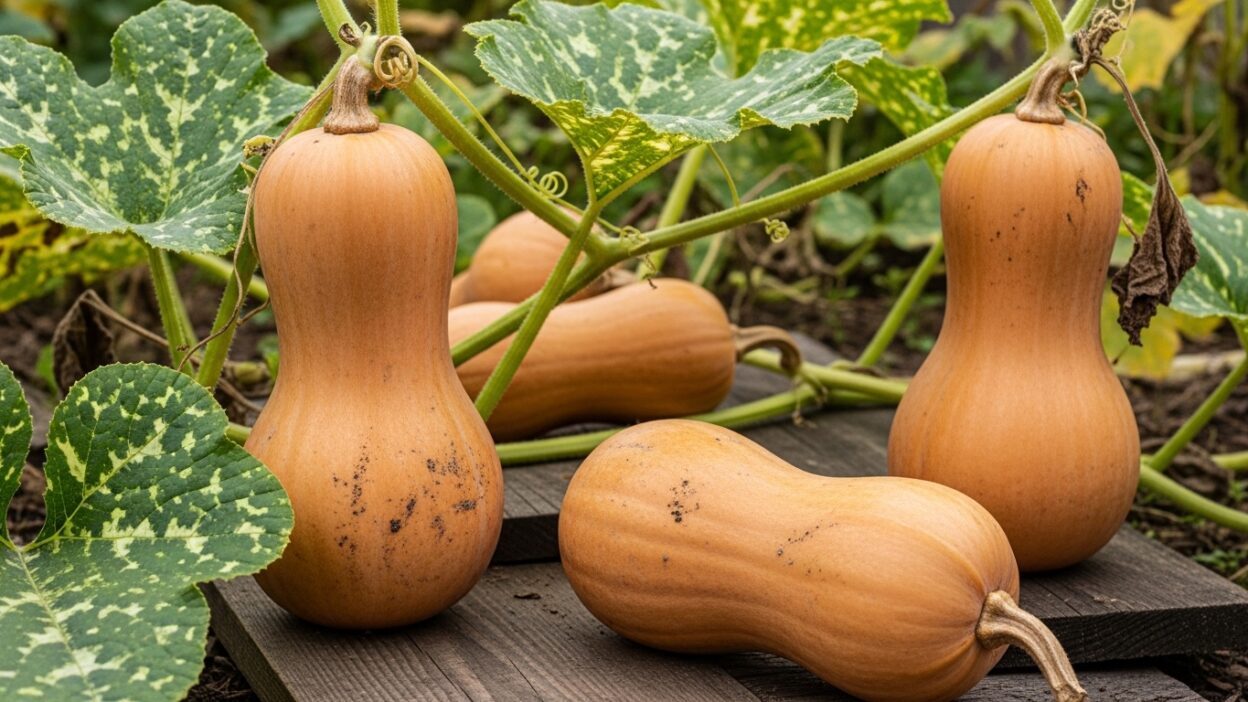
One major advantage is size. Honeynuts are much more uniform in weight and shape compared to butternuts, which can vary widely. The thick neck contains most of the usable flesh, while the rounded base holds the seed cavity. Because of their compact size, you can usually plan on one squash per person.
Though they may appear large in photos, most honeynuts are only slightly longer than a hand.
Growing Habit in the Garden
Like other winter squash, honeynut plants produce large leaves and trailing vines. They’re considered a “dwarf” type, but you still need to dedicate garden space for the vines to spread.
You can sow seeds directly outdoors, which is the recommended method. Starting indoors is possible but not ideal, as seedlings can be delicate during transplanting.
How to Direct Sow
-
Choose a full-sun location.
-
Create soil mounds (hills) about 12 inches wide.
-
Space mounds 4 to 6 feet apart.
-
Plant 2 to 3 seeds per mound, about 1 inch deep.
-
Gently firm soil and water carefully without washing seeds away.
Seeds typically sprout within two weeks. Once seedlings are established, thin to two strong plants per mound.
For best fruit production, grow at least three plants. A healthy season usually produces three to six squash per plant. Having multiple plants increases flower overlap, improving pollination success.
Plant Care
After plants leaf out, apply a balanced fertilizer every couple of weeks during early growth. The goal is to encourage strong vines and a healthy leaf canopy.
Winter squash are generally resilient. In areas with moderate rainfall, they often thrive with minimal watering. Their large leaves shade the soil and help retain moisture.
If leaves begin drooping noticeably, water deeply but avoid creating standing puddles.
Honeynuts are fairly disease-resistant. They may attract insects like stink bugs, which can damage leaves and stems. Monitor plants regularly and remove pests if needed.
The leaves are naturally variegated with pale patterns along the veins. This can resemble powdery mildew at first glance, but it’s simply the plant’s normal coloring.
How Fruits Form
Like all winter squash, honeynut squash produces separate male and female flowers. The flowers are large, bright yellow-orange, and open early in the morning.
The female flower contains a tiny fruit embryo at its base. The male flower sits on a thin stalk without a developing fruit.
Insects carry pollen from male to female flowers, triggering fruit development. Early in the season, plants produce many more male flowers than female flowers — this is normal and improves pollination chances.
Because flowers open only briefly in the morning, successful fruit set depends on active pollinators like bees and ants during that short window.
Once pollinated, the small green embryo quickly enlarges into a developing squash.
With strong pollination and healthy vines, each plant can yield several squash.
Can Honeynut Squash Grow in Containers?
Yes, although they still need space.
Use a large container or grow bag filled with rich, well-draining soil. Provide room for vines to extend and support fruits if vines are trained upward.
Plant at least two vines per container to improve pollination success. Place containers where pollinators visit frequently, or hand-pollinate flowers if needed.
When to Harvest
Young honeynuts are dark green for most of the season. As they mature, they pass through a mottled green-and-orange phase before turning a rich tan or burnished honey color.
Watch the stem closely. A squash is ready to harvest when the stem becomes dry and firm. Use clippers to cut the fruit from the vine. Do not pull, as this may damage the plant.
Even if stems are not completely dry, harvest all squash before the first frost. They will finish ripening off the vine.
Saving Seeds
Honeynut squash is a hybrid — a cross between butternut and buttercup squash. Because of this, saved seeds may not produce identical plants the following year.
Additionally, squash varieties cross-pollinate easily. If other squash types grow nearby, it’s difficult to guarantee pure seed unless controlled pollination methods are used.
Seed saving is possible for experimentation, but results may vary.
Storage
Honeynut squash has thinner skin than butternut, so it does not store quite as long.
After harvest, allow squash to cure in a cool, dry, shaded area for about a week. This helps harden the stem and improve storage life.
In cool, dry conditions around 55°F, honeynuts typically last one to three months. Discard any that show signs of shriveling or mold.
They also freeze well. Halve them, remove seeds, cube the flesh, and store in freezer-safe containers for winter use.
A Few Fun Facts
Honeynut squash was developed by Cornell plant breeder Michael Mazourek in collaboration with chef Dan Barber. Their goal was to create a smaller, better-tasting version of butternut squash.
Another bonus: unlike butternut, honeynut skin becomes tender when cooked. You can eat the skin after roasting.
If you enjoy winter squash, honeynut is absolutely worth adding to your garden.