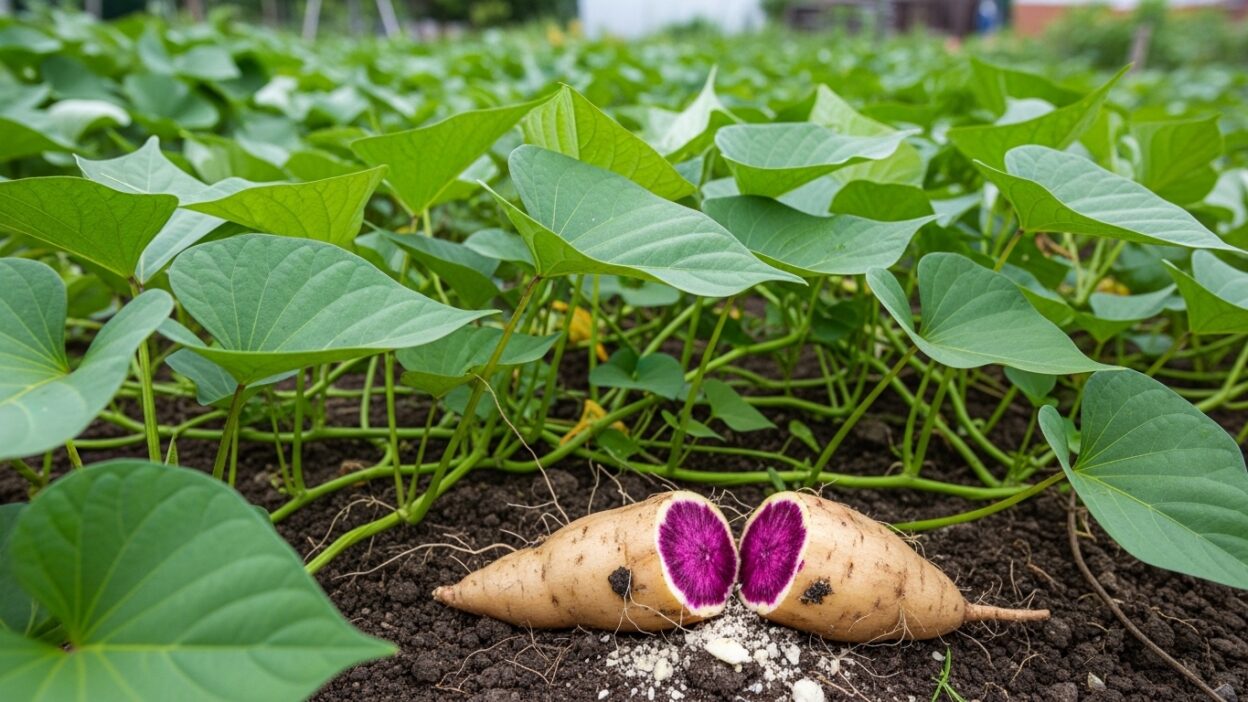
Okinawan sweet potatoes are one of the most beautiful and flavorful varieties you can grow in a home garden. Their creamy beige skin hides a vibrant purple-magenta interior that becomes even deeper in color when cooked. Rich in anthocyanins, vitamin C, polyphenols, and fiber, they’re as nutritious as they are eye-catching.
Although they’re closely associated with Okinawa, they’re also widely grown in Hawaii and are often called Hawaiian purple sweet potatoes. They were a staple food in the Okinawa Blue Zone, a region known for its high number of centenarians.
Unfortunately, they’re not easy to find in most standard American grocery stores. You’re more likely to spot them at specialty markets or farmers’ markets in early fall. Growing your own is often the easiest way to enjoy them regularly.
What Do Okinawan Sweet Potatoes Taste Like?
Inside, the flesh is a bold purple-pink color that stays vibrant when cooked. In fact, it often darkens to a richer purple shade.
Compared to common orange varieties like Beauregard, Okinawan sweet potatoes are starchier and less sugary. Their flavor is nutty, slightly earthy, and pleasantly sweet without being overpowering.
They make excellent crispy fries, add striking color to salads, and cook quickly in a pressure cooker. One simple favorite is baking them and topping with black beans, salsa, and guacamole for a hearty vegetarian meal.
What Are Sweet Potato Slips?
Sweet potatoes are not grown from seeds. Instead, they’re started from slips, which are leafy shoots that sprout from a mature sweet potato.
Once a sweet potato begins sprouting, the shoots are removed and placed in water to develop roots. These rooted shoots become the plants you set in your garden.
You can grow your own slips if you already have a sweet potato on hand. If not, purchase slips from a reliable nursery. They usually arrive packaged carefully, with roots contained in small soil plugs.
When they arrive:
-
Remove outer packaging immediately
-
Leave the soil plug intact
-
Keep them lightly watered
-
Place them in a sunny window until planting time
Because slips are sensitive to cold, timing your order can be tricky. Many gardeners order early to ensure availability, then care for the slips indoors until outdoor temperatures are safe.
When to Plant Okinawan Sweet Potato Slips
Sweet potato slips should be planted only after nighttime temperatures consistently stay above the lower 50°F range.
Do not rely solely on calendar dates. Weather conditions matter more than frost dates. If unexpected cold snaps occur, protect young plants with covers.
If you’ve been keeping slips indoors, harden them off before planting. Let them spend a few hours outside each day for about a week, gradually increasing exposure to sunlight.
Preparing the Soil
Sweet potatoes are hardy plants, but proper soil preparation makes a major difference in the quality and shape of the tubers.
About a week before planting:
-
Deeply turn the soil where each slip will be planted (this area is often called the crown).
-
Loosen soil in a wide radius around the planting area, since vines will spread and may root at nodes.
-
Mix compost throughout the bed.
-
Rake smooth and water lightly.
Clay-heavy soil can cause misshapen tubers unless amended generously with compost. On the other hand, soil that is too loose and peat-heavy can lead to overly long or oddly shaped potatoes.
The ideal soil is light and fluffy but still holds together when squeezed while damp. It should drain well but remain evenly moist.
A simple drainage test: dig a 12-inch-deep hole and fill it halfway with water. The water should drain steadily. If it pools, improve drainage before planting.
How Much Space Do They Need?
Sweet potatoes need more room than you might expect.
The underground cluster itself does not take up much surface space. In fact, they can grow in large containers or grow bags.
However, the vines spread extensively and require significant room. The leaves provide energy for tuber growth, so vine expansion is essential.
A 10′ x 10′ garden plot works well for several plants, though vines may still stretch beyond boundaries. You can gently redirect vines around the perimeter of the plot as they grow.
Plant slips 12 to 18 inches apart. They do not need to be arranged in straight rows. Some gardeners plant three slips in a triangle pattern with space between different varieties.
Before planting:
-
Remove lower leaves from the slip, leaving a cluster at the top.
-
Dig a hole about 4 inches deep.
-
Insert the slip fully and press soil firmly around it.
-
Water thoroughly.
Mark the crown location with a tall stake. By fall, vines will obscure the planting point, and the stake will help you locate the main tuber cluster during harvest.
Caring for Okinawan Sweet Potato Plants
One of the best things about growing sweet potatoes is how low-maintenance they are.
After the plants settle in for two to three weeks, fertilize every couple of weeks early in the season. Once vines become lush and leafy, stop fertilizing unless heavy rains have washed nutrients away.
A balanced fertilizer such as 5-10-10 or 8-24-24 works well. Avoid high-nitrogen formulas, which promote excessive leaf growth at the expense of tuber development.
Protect the Vines
Deer and rabbits love sweet potato leaves. Fencing is strongly recommended.
A tall fence — around 7 feet — helps deter deer, while chicken wire along the lower section prevents rabbits from squeezing through. Even if animals nibble leaves occasionally, sweet potatoes are resilient and usually regrow quickly.
Some gardeners allow wildlife to eat back the vines just before harvest, which makes digging easier by clearing thick foliage.
Final Thoughts
Okinawan sweet potatoes are easy to grow, vibrant in color, and rich in flavor. With warm temperatures, well-prepared soil, and enough space for vines to spread, they reward gardeners with beautiful purple-fleshed tubers in early fall.
They may require room in the garden, but their taste, nutrition, and striking appearance make them well worth the space.
Happy planting.