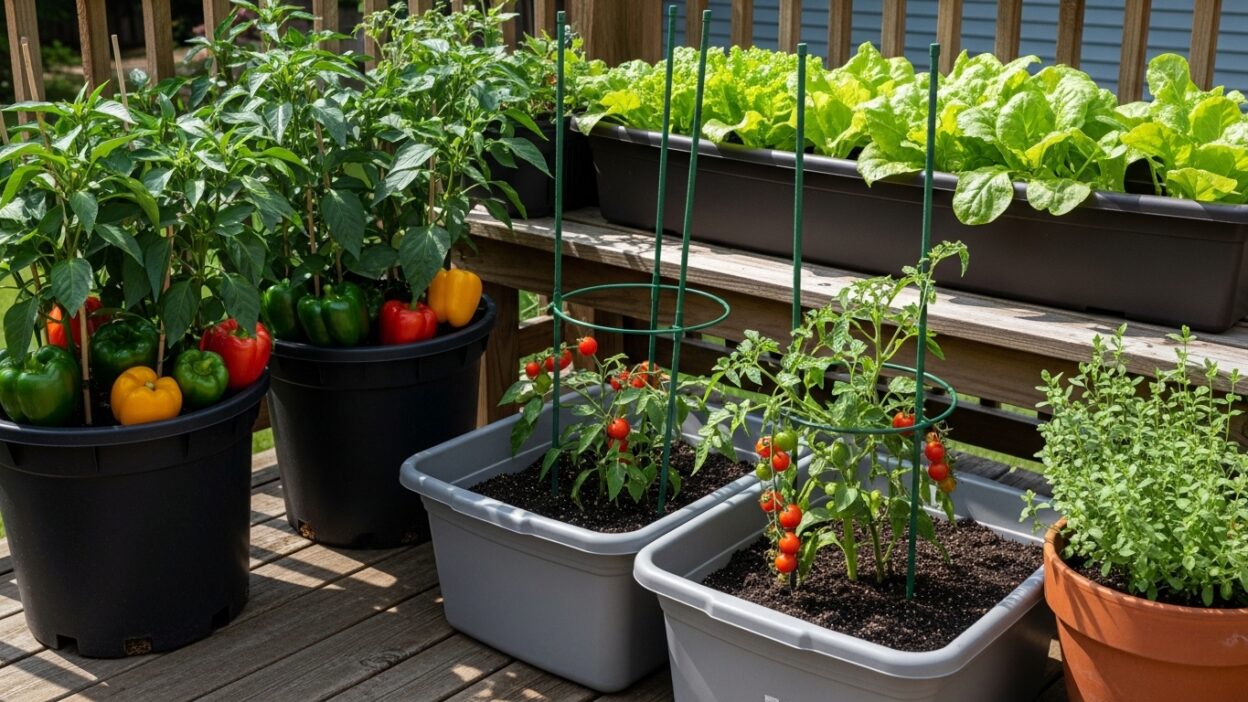
Interested in growing your own vegetables but don’t have a traditional garden plot? Or maybe you’re new to gardening and not ready to commit to digging up the backyard. Container gardening makes it possible to grow herbs and vegetables in small spaces like balconies, patios, decks, and even sunny windowsills. With the right setup, pots, buckets, storage tubs, and raised benches can produce an impressive harvest.
Growing vegetables in containers is one of the easiest ways to begin gardening. It allows you to enjoy fresh, homegrown food without needing perfect soil or a large yard. Over time, many gardeners discover that container gardening isn’t just a substitute for in-ground beds — it can actually be the better option.
I’ve maintained container gardens in different homes over the years. In one apartment, a southeast-facing balcony gave me just enough sunlight to grow bell peppers and a cherry tomato. Later, when trees shaded most of my backyard, my sunny deck became the main growing space. Garlic, onions, squash, and sweet potatoes went to a nearby community plot, while most other crops moved into containers at home. That shift turned out to be the perfect balance.
Why Choose Container Gardening?
Making the Most of Small Spaces
Containers are ideal for gardeners with limited sunlight or poor soil. Urban balconies, shaded yards, patios, and decks can all become productive growing areas. Pots can be placed along railings, on outdoor tables, in hanging baskets, or even on raised benches.
A raised garden bench can be especially useful for growing lettuce and annual herbs while keeping plants at a comfortable height.
Better Environmental Control
Container gardening gives you more control over growing conditions. If a plant needs partial shade, you can move it. If heavy rain is expected, pots can be protected from waterlogging. During storms, containers can be repositioned to reduce wind damage.
This flexibility can make a huge difference compared to fixed garden beds.
Improved Accessibility
As time goes on, bending and kneeling in the garden can become more challenging. Containers allow many gardening tasks — planting, watering, harvesting — to be done while standing upright.
Raised benches, potting tables, and plant stands help reduce strain and make gardening more accessible for people with mobility concerns. Elevating pots also keeps peppers, eggplants, and green beans easier to reach and less likely to tip.
Soil Control
When you garden in containers, you control the soil entirely. This is especially helpful if your yard soil drains poorly or contains diseases.
If a plant develops a soil-borne issue, you can simply discard the potting mix and sanitize the container. In traditional garden beds, soil diseases can linger for years.
Fewer Pest Surprises
While containers don’t eliminate pests, they make it easier to monitor plants closely. Aphids, mildew, or nutrient deficiencies can be spotted early when plants are right outside your kitchen door.
Beauty and Versatility
Vegetables can be just as decorative as flowers. A deck filled with leafy greens, peppers, and tomatoes can be stunning. Adding pollinator flowers like zinnias and echinacea brings even more color and encourages beneficial insects.
Containers also allow experimentation with less common crops, such as ginger, galangal, or lemongrass.
What Can You Grow in Containers?
Most vegetables and herbs perform well in pots, though yields may be slightly smaller because nutrients are used up more quickly.
Vegetables That Grow Well in Containers
Tomatoes
Peppers
Eggplants
Cucumbers
Radishes
Potatoes
Garlic
Carrots
Green beans
Peas
Onions
Green onions
Ginger
Lemongrass
Lettuce and leafy greens (arugula, mustard greens, spinach, kale, Swiss chard)
Herbs for Containers
Basil
Parsley
Mint
Thyme
Tarragon
Oregano
Marjoram
Rosemary
Sage
Chives
Cilantro
Chamomile
Lemon balm
Bay leaf
Many herbs, especially mint and thyme, thrive in pots and look beautiful doing it.
A Reliable Soil Mix for Containers
Store-bought potting mixes can vary widely in quality. For consistent results, a simple homemade blend works well:
1 part potting soil
1 part compost
1 part peat moss
1 part perlite
A handful of organic fertilizer such as Plant-tone
Mix thoroughly before filling containers. This blend provides good drainage, moisture retention, and nutrients.
Moisture-control potting soils can help beginners manage watering, though some contain synthetic fertilizers. Choose based on your gardening preferences.
Choosing the Right Containers
Drainage Is Essential
Every container must have drainage holes. If they’re too large, line the bottom with a small piece of screen or a pebble to prevent soil from washing out.
Avoid self-watering containers that hold hidden reservoirs of water. These can keep roots too wet during rainy periods.
Terracotta vs. Plastic
Terracotta pots are attractive but dry out faster, especially in hot weather. Plastic containers retain moisture longer and are often lighter and more economical.
Both materials work well — just adjust your watering schedule accordingly.
Large Containers for Bigger Crops
For tomatoes and other large plants, sturdy storage tubs can be surprisingly effective. They’re affordable, stable, and roomy enough for deep root systems and support stakes.
Drill drainage holes in the bottom before planting.
Saucers and Pebbles
Saucers can protect surfaces and catch excess water, but empty them after heavy rains to prevent roots from sitting in water.
Adding a half-inch layer of pebbles to the bottom of taller plant pots helps with drainage and adds weight for stability during windy weather.
Watering Containers
Watering is the most demanding part of container gardening. Pots dry out faster than in-ground beds.
Water early in the morning until water drains from the bottom. During hot weather, check plants daily and water again if the top inch of soil feels dry.
Using Ollas for Efficient Watering
Ollas are unglazed clay pots buried in soil and filled with water. They slowly release moisture directly to plant roots.
This method:
-
Reduces watering frequency
-
Prevents overwatering
-
Conserves water
-
Encourages strong root growth
You can purchase ollas or make your own using clay pots sealed together. They are especially useful for tomatoes and peppers during intense summer heat.
Fertilizing Container Plants
Vegetables are heavy feeders, and nutrients wash out of pots quickly.
Apply a balanced fertilizer every couple of weeks during the growing season. Organic options like fish emulsion or slow-release plant food work well.
After heavy rains, replenish nutrients with an extra feeding.
Container gardening offers flexibility, beauty, and practicality. Whether you’re working with a sunny balcony or a full deck, you can grow an impressive variety of herbs and vegetables.
With the right soil mix, proper drainage, consistent watering, and regular feeding, your container garden can produce a steady harvest all season long.
Happy patio planting.